
Ashwagandha May Lower Stress and Boost Fitness: What the Science Says
You know the feeling—your mind is racing after a stressful day, or your body feels sluggish during a workout you used to breeze through.
What if a single, natural supplement could help you feel calmer and even boost your stamina? Ashwagandha, a root used for centuries in Ayurveda, is now supported by modern studies showing it can actually lower stress and improve fitness. Let’s unpack how this ancient herb fits into your life, how to use it, and what to look for if you want real results.
- Meta-Analysis
- A statistical technique combining results from multiple studies to find overall patterns.
- Placebo Effect
- Improvement in symptoms due to belief in treatment rather than the treatment itself.
It is late in the evening. You have just wrapped up a day that was more demanding than you expected. Maybe you are stuck in traffic, or you are winding down with your favorite playlist. You feel your shoulders tense and your mind still replaying the day’s events. You wish for something that could help you unwind, but you do not want to reach for a prescription or rely on yet another cup of coffee to push through tomorrow’s fatigue.
This is where ashwagandha enters the conversation. It is not a miracle cure, but it is an herb with a long history of helping people manage stress and find better balance. For centuries, ashwagandha root has been a staple in Ayurvedic medicine, promising resilience against stress and a calmer mind. In recent years, researchers have started to ask: does this ancient remedy really work in the fast-paced world we live in now?
Many of us are skeptical when we hear about herbal supplements. After all, so many products promise a lot but deliver little. But ashwagandha is different. Recent clinical trials suggest it does more than just soothe your nerves. The science shows it might lower stress hormones, improve mental well-being, and even make your workouts feel easier.
So if you have felt burned out or want extra support for your mental and physical health, you might be wondering: is ashwagandha worth trying? And if so, how can you use it safely and effectively? Let’s start by looking at why this herb matters, especially in today’s high-stress, always-on world.
Stress is not just an emotional experience. It triggers a cascade of biological changes. When you face a tough deadline or a tough workout, your body releases cortisol—the main stress hormone. Cortisol helps you react quickly, but if it stays high for too long, it starts to chip away at your mental sharpness, disrupt your sleep, and even break down muscle. Over months or years, this can lead to burnout, poor recovery from exercise, and trouble with focus or memory.
Ashwagandha’s main claim to fame is as an adaptogen. That means it helps your body adapt to physical and emotional stress. Researchers believe ashwagandha works by moderating your hypothalamic-pituitary-adrenal axis, or HPA axis. This is your body’s main stress-response system. When the HPA axis is constantly activated, your body stays in fight-or-flight mode. Ashwagandha seems to dial down this overactive response, helping you return to a more balanced state.
There is another reason ashwagandha is getting so much attention. It does not just affect your stress hormones. Some studies show that it also supports the production of GABA, a neurotransmitter that helps calm your nervous system. GABA is what your brain uses to slow things down, promote relaxation, and prepare for sleep. If your GABA levels are low, you are more likely to feel anxious or have trouble falling asleep. By supporting GABA, ashwagandha could help you unwind at the end of the day and get deeper, more restorative sleep.
Finally, ashwagandha’s effect on physical performance is not just about feeling less tired. When cortisol is elevated, your muscles break down faster and recover more slowly. Ashwagandha appears to blunt this effect, supporting muscle repair and even increasing VO2max, a key measure of aerobic fitness. This means you might recover better, push harder in your workouts, and see more progress over time.
So ashwagandha is not just about stress relief. It fits right at the intersection of mental health, sleep quality, and fitness—three pillars that shape how you feel every day. But before you try it, you will want to know where you stand. That brings us to the biomarkers that tell your stress and recovery story.
When you are deciding whether ashwagandha could help you, it is important to know what is happening inside your body. You cannot manage what you do not measure. There are three main biomarkers to track if you want to get serious about stress, sleep, and fitness: cortisol, VO2max, and subjective stress and anxiety scores.
First up is cortisol. This hormone is your body’s main alarm bell for stress. Most labs measure cortisol in the morning, when it should be at its highest. For most healthy adults, morning cortisol levels fall between six and eighteen micrograms per deciliter. If your level is consistently above eighteen, your body is likely under chronic stress. That can mean you are at higher risk for anxiety, sleep disturbances, and even weight gain around the abdomen. If your cortisol is below six, you might feel chronically fatigued, have low motivation, and struggle with resilience to stress. Ashwagandha’s effect on lowering high cortisol is one of its best-proven benefits. A meta-analysis published in 2021 found that daily ashwagandha supplementation could reduce high cortisol levels by up to thirty percent in people with chronic stress. This is not just a number—it translates to fewer racing thoughts, better sleep, and a more balanced mood during stressful periods.
The second key marker is VO2max. This is a lab measure of how efficiently your body uses oxygen during exercise. Higher VO2max means better endurance and cardiovascular health. Ashwagandha has been shown to increase VO2max by about ten percent in both recreational exercisers and athletes, according to a meta-analysis of randomized controlled trials. If your fitness tracker or gym offers VO2max testing, aim for steady improvement—especially if you are using ashwagandha to support your training.
Finally, subjective stress and anxiety scores are powerful tools. Many studies use validated scales, such as the Perceived Stress Scale or the Hamilton Anxiety Rating Scale. You can use a simple one-to-ten scale for yourself. Track how stressed or anxious you feel each day for a week or two. If you try ashwagandha, look for gradual improvement in your scores over four to eight weeks. This is your real-world feedback on whether the supplement is making a difference in your daily life.
These biomarkers give you a baseline and a way to measure progress. If your cortisol is high, your sleep is restless, or your workouts are suffering, you now have clear targets to track as you experiment with ashwagandha. Next, let’s look at how to use this herb in an evidence-based, practical way.
If you are ready to try ashwagandha, you want to know how much to take, when to take it, and what to look for in a supplement. Most of the strongest studies use a standardized root extract. This is important—standardization means the product contains a consistent amount of active compounds, called withanolides. Without this, you cannot be sure what you are getting.
The dosage that shows up most often in research is three hundred milligrams to six hundred milligrams daily. For stress reduction and mental well-being, studies often use three hundred milligrams in the morning and another three hundred milligrams in the evening. This split dosing helps maintain steady levels in your body and supports both daytime calm and nighttime relaxation. For physical performance and fitness, six hundred milligrams daily is the usual target. In these studies, participants often notice increased stamina, faster recovery, and even muscle strength improvements after about eight weeks.
The mechanism behind these doses comes down to withanolides. These compounds interact with your HPA axis, lowering the stress response, and supporting GABA, which calms your brain. By keeping your cortisol in check and promoting neurotransmitters that help you relax, ashwagandha creates the internal conditions for both mental and physical performance.
When choosing a supplement, look for labels that say “standardized to at least five percent withanolides.” This matches what is used in the best clinical trials. Avoid products that do not specify the extract strength or sourcing. Consistency matters—you want the same dose every day.
Most studies report that ashwagandha is well tolerated. Mild side effects can include stomach upset or drowsiness. Rarely, people experience headaches or gastrointestinal discomfort. If you are sensitive or have a history of allergies to plants in the nightshade family, start with a lower dose and monitor how you feel.
If you are on medication, especially for thyroid conditions or autoimmune diseases, check with your healthcare provider before starting. Ashwagandha can interact with certain drugs and may not be appropriate for everyone.
To sum up: start with three hundred milligrams of standardized root extract in the morning. If needed, add another three hundred milligrams in the evening. Track your stress, sleep, and workout performance for four to eight weeks. This is the protocol supported by the strongest evidence so far. But supplements are only part of the picture. Lifestyle choices make a big difference, too. Let’s explore those next.
Ashwagandha can shift your biology, but it works best when paired with healthy habits that lower your stress and support your body’s natural rhythms. Start with sleep. You will get better results from ashwagandha if you aim for seven to nine hours of quality sleep each night. Sleep is when your body resets cortisol and repairs muscle. Ashwagandha’s calming effect on GABA makes it easier to fall asleep and stay asleep, but you also need to protect your sleep environment. That means keeping your room dark, cool, and quiet, and turning off screens at least thirty minutes before bed.
Exercise is the next major lever. Regular aerobic exercise, such as brisk walking, cycling, or jogging, helps lower baseline cortisol over time. Strength training two or three times weekly boosts endorphins and supports muscle repair, especially when you are using ashwagandha. In clinical trials, people who combined ashwagandha with exercise saw even greater improvements in VO2max and strength than with either strategy alone. The mechanism is synergy—ashwagandha blunts the stress response that can slow muscle recovery, while exercise makes your body more resilient to future stress.
Nutrition matters, too. Diets high in ultra-processed foods or simple sugars can keep cortisol elevated and disrupt sleep. Focus on meals rich in fiber, colorful vegetables, lean protein, and healthy fats. If you are using ashwagandha, pair it with a small snack if you notice stomach upset. Avoid caffeine or heavy meals within three hours of bedtime if sleep is your goal.
Finally, manage your daily rhythm. A short meditation, deep breathing, or journaling session before bed can help lower stress and signal to your brain that it is time to wind down. Ashwagandha’s adaptogenic effects are amplified when you support your body’s natural recovery signals.
So, while ashwagandha can help tip the balance in your favor, your daily habits are what keep it there. Next, let’s talk about the early warning signs that your stress or recovery systems are under strain—and how to know when it’s time to take action.
Your body tries to tell you when stress is taking its toll, but the signals are not always obvious. One of the first signs is trouble falling asleep or waking up in the middle of the night with your mind racing. If you wake up feeling unrefreshed, even after a full night’s sleep, your stress hormones may be out of balance.
Next, pay attention to your mood and focus. Persistent irritability, anxiety, or a sense of being constantly on edge are red flags that your HPA axis is in overdrive. You might also notice your motivation dipping, or you find it harder to concentrate on tasks that used to feel easy. This is not just a mental challenge—it is often rooted in the biology of stress and neurotransmitter depletion.
Physical performance is another early warning system. If your usual workouts start feeling harder, your recovery drags on for days, or you stop making progress despite consistent effort, your body might be struggling to repair itself. Elevated cortisol breaks down muscle and slows adaptation. This is where ashwagandha’s ability to support recovery and lower stress hormones can help you get back on track.
Other physical signs include unexplained weight gain, especially around the abdomen, mild digestive upset, or frequent headaches. These are all signs your stress system is under strain. If you notice several of these symptoms, especially combined with poor sleep and high perceived stress, it is time to consider more structured intervention.
The good news is that these early signs are reversible. Tracking your symptoms alongside simple biomarkers like morning cortisol and subjective stress scores can help you see patterns and act before things spiral. That brings us to how to synthesize all this information into a sustainable strategy.
Ashwagandha stands out from other herbal supplements because it is supported by modern clinical research. Its benefits for stress, sleep, and physical performance are not just anecdotal—they have been measured in real people, in well-designed studies. The key is consistency, quality, and a willingness to track your own progress.
If you decide to add ashwagandha to your routine, use a standardized root extract at three hundred to six hundred milligrams daily, split between morning and evening if possible. Pair it with regular exercise, good sleep habits, and a balanced diet for best results. Give yourself at least four to eight weeks to notice the full benefits. Track your stress, sleep, and fitness—both how you feel and, if possible, with simple labs or fitness measures.
Remember, ashwagandha is not a replacement for other healthy habits or medical care. If you have underlying health conditions or take medication, consult your healthcare provider before starting. And be aware that while short-term use is well studied, long-term effects still need more research.
The takeaway is simple. If you are looking for a natural way to lower stress, sleep better, and power up your fitness, ashwagandha offers a science-backed option. The next step is yours—track your baseline, start with a consistent protocol, and see how your mind and body respond. With the right approach, you can reclaim a calmer, stronger, and more resilient you.
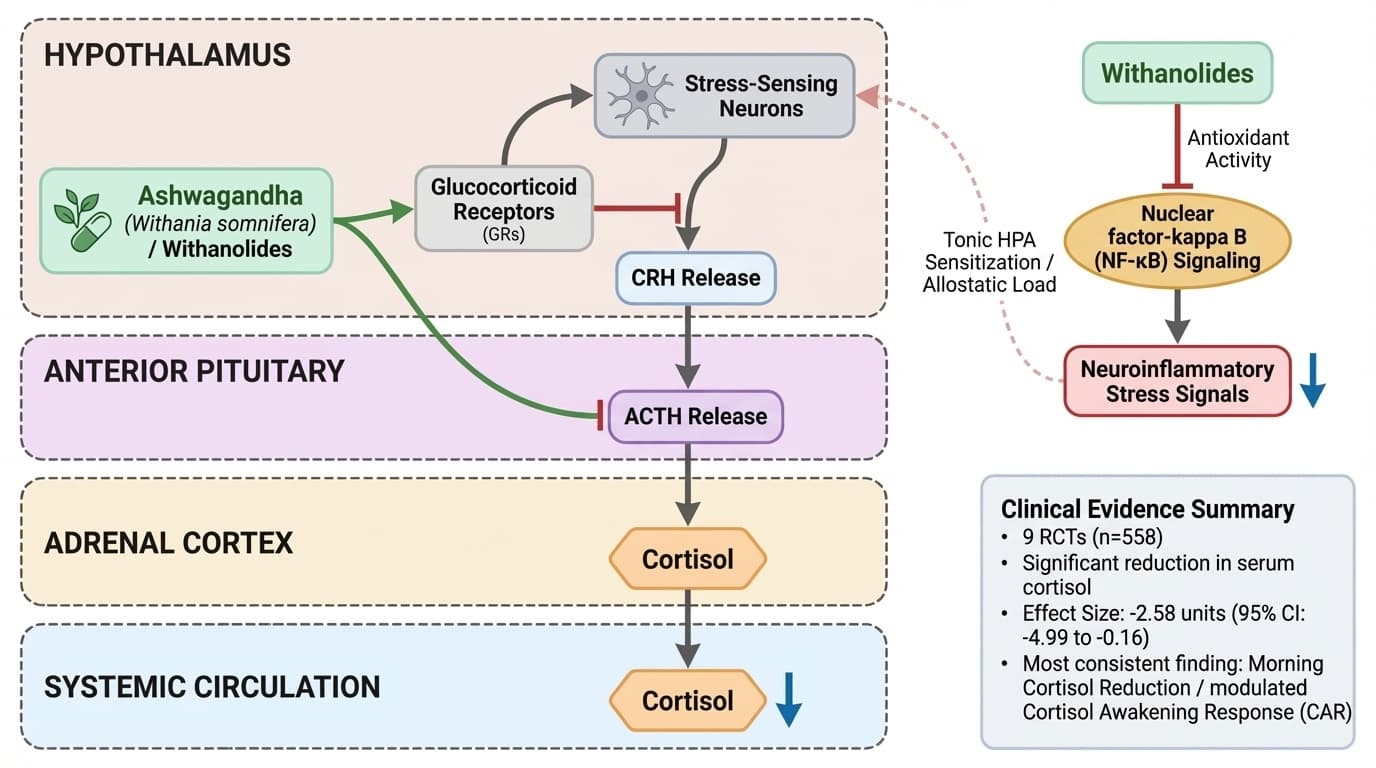
Ashwagandha's Cortisol Effect Ranges from 0% to 67%: What Determines If You're a Responder
The diagram should depict the HPA axis cascade from the hypothalamus (CRH release) to the anterior pituitary (ACTH secretion) to the adrenal cortex (cortisol synthesis), with ashwagandha withanolides shown inhibiting CRH and ACTH signaling at the top of the axis. A secondary branch should illustrate withanolide suppression of NF-κB–driven neuroinflammation, reducing tonic HPA sensitization, with both pathways converging on decreased circulating cortisol — quantified by the meta-analytic reduction of 2.58 units (95% CI: −4.99 to −0.16) across 9 RCTs.
Diagram glossary
- ACTH:
- A pituitary hormone that stimulates the adrenal cortex to release cortisol.
- CAR:
- The cortisol awakening response, a morning spike in cortisol sensitive to HPA tone.
- CRH:
- A hypothalamic hormone that stimulates the pituitary gland to release ACTH.
- HPA:
- The hypothalamic-pituitary-adrenal axis, a central regulatory circuit governing cortisol secretion.
- withanolide:
- A bioactive steroidal lactone in ashwagandha that modulates stress and cortisol pathways.
Track this in your stack
See how ashwagandha relates to your health goals and monitor changes in your biomarkers over time.