
Astragalus Cuts HbA1c by Up to 1.77% — But Only If You're in the Right Half of Responders
What Meta-Analyses Reveal About Astragalus, Blood Sugar, and Why Your Body May Be the Real Variable
Imagine finding a supplement that promises to lower your blood sugar, only to discover it works wonders for some people, but barely moves the needle for others.
That is the reality with astragalus—a traditional herb that can drop your HbA1c by nearly two percent if you are in the right group of responders. Today, you will hear why this matters, how to find out which group you belong to, and what you should do next if you care about your metabolic health.
- TA-65
- A branded astragalus product containing isolated cycloastragenol, which research shows is less effective than whole-herb extracts for blood sugar and inflammation.
- Astragalus polysaccharide extract
- A concentrated supplement form of the active carbohydrate compounds (polysaccharides) found in astragalus, typically standardized for clinical use.
- Hemoglobin A1c
- Average blood sugar over the past 2-3 months by assessing glycated hemoglobin. each 1% increase raises cardiovascular risk by 18%.
- mTOR pathway
- The mTOR pathway is a cellular signaling system that controls cell growth, energy use, and metabolism. It helps regulate how cells respond to nutrients and stress, and disruptions in this pathway are
- IL-6
- A proinflammatory cytokine (immune signaling molecule) that astragalus can reduce in responsive individuals, indicating broader anti-inflammatory effects beyond blood sugar.
- Root extract
- An herbal extract made from the root portion of a plant.
- TLR4 receptors
- Toll-like receptor 4 proteins on immune cells that astragalus targets. Individual differences in these receptors may explain why some people respond better to astragalus.
- glucose
- A simple sugar in the blood that serves as the body's primary energy source.
- mTOR
- A central protein kinase that regulates cellular metabolism, growth, and survival.
- polysaccharide
- A complex carbohydrate found in astragalus extracts that can influence metabolic health.
Maybe you have stood in the supplement aisle, holding a bottle that claims to support healthy blood sugar, and wondered if it will actually work for you. Or perhaps you have a friend who swears by a certain herb, but when you try it, nothing seems to change. This is a common story, especially when it comes to astragalus. You might have heard it is a staple in traditional medicine, touted for boosting immunity and supporting metabolic health. But here is the twist: when it comes to lowering blood sugar, astragalus is not a universal magic bullet.
Some people see dramatic changes after taking astragalus, while others get little to no benefit. This can be both frustrating and confusing. You want to make good choices for your health, but how do you know if you are picking the right tool? The answer, as you will see, lies in understanding your own biology—and learning how to measure what matters most. In this episode, we are going to unravel why astragalus works so differently from person to person, what that means for your metabolic health, and how you can take control of your own response.
So, the next time someone says, “Supplements are just expensive urine,” you will know there is more to the story. Sometimes, the difference between life-changing results and wasted money comes down to a single, measurable number. Let’s explore why that matters for you.
If you are trying to keep your blood sugar in check, you have probably heard of HbA1c. This is the marker doctors use to track your average blood sugar over several months. Lowering your HbA1c by even a small amount can reduce your risk of diabetes complications, heart disease, and even cognitive decline.
Here is where astragalus gets interesting. In recent years, researchers have dug into whether this herb can help people with high blood sugar—especially those with type 2 diabetes or signs of metabolic syndrome. The results are striking. In some groups, astragalus can lower HbA1c by up to one point seven seven percent. That is as much as many prescription drugs, and it can mean the difference between prediabetes and normal levels. For someone with an HbA1c of eight, a drop to six point two percent is massive. It translates to fewer long-term complications, better energy, and a lower chance of needing medication in the future.
But here is the catch: not everyone sees these results. Some people only get a zero point nine three percent drop, which is helpful but far less dramatic. Others see almost no change at all. This is not just random chance. It is a reflection of how your body processes the active compounds in astragalus. Differences in your gut microbiome, your genetics, and even the exact supplement you use all play a role. So, if you are hoping to use astragalus to take control of your metabolic health, understanding how you respond is not just helpful—it is essential.
The big lesson here is that metabolic health is not one-size-fits-all. Astragalus can be a powerful tool, but only if your biology matches the way it works. That brings us to the next key point: how do you know if you are in the group that responds?
Before you start any supplement, you need a way to track whether it is actually working. For metabolic health, the gold standard is your HbA1c. This is a blood test that shows your average blood sugar over the past ninety days. Most labs consider anything below five point seven percent as normal, while five point seven to six point four percent is prediabetes, and six point five percent or higher signals diabetes. But even within these ranges, lower is generally better, as long as you are not dipping into hypoglycemia.
So, what does a drop of one point seven seven percent in HbA1c actually mean for you? Imagine your starting HbA1c is eight percent—a level that puts you at significant risk for long-term complications. Dropping to six point two percent brings you much closer to the safe zone, potentially reducing your risk for nerve damage, kidney problems, and vision loss. A change of zero point nine three percent is still good, but might not move you out of the danger zone. Studies show that every one percent reduction in HbA1c is linked to a significant drop in the risk of diabetes complications, so these numbers matter in a very real way.
You should also pay attention to other markers of metabolic health, including fasting glucose, triglycerides, and waist circumference. But HbA1c is especially important because it reflects both your day-to-day habits and your longer-term trends. If astragalus works for you, you should see a meaningful drop after about twelve weeks. If you do not, it is a sign that your biology does not respond to this particular supplement, and you might be better off trying another strategy.
This is why tracking is so powerful. Instead of guessing, you have clear data to guide your decisions. And that brings us to how you can use this information to build a protocol that actually works for you.
If you want to give astragalus a fair trial, you need a plan that is both practical and grounded in evidence. Here is what the research supports. Start with a baseline HbA1c test. This will give you a clear starting point. Next, take five hundred milligrams of astragalus polysaccharide extract twice daily. Make sure you are using a product labeled as 'polysaccharide extract' or 'whole root extract,' not an isolated single compound like TA-65. The full spectrum of polysaccharides in the whole root is what delivers the metabolic benefits, according to multiple randomized trials and meta-analyses.
Stick with this regimen for at least twelve weeks. Astragalus works gradually, and it takes time for your HbA1c to reflect changes in your average blood sugar. After twelve weeks, retest your HbA1c. If you see a drop of at least one percent, you are likely a high responder. This means astragalus is making a meaningful impact on your metabolic health, and it is worth continuing.
If your HbA1c barely moves, or the drop is less than one percent, you might be in the low-responder group. In that case, consider switching to another evidence-based supplement, or focusing more on lifestyle changes. Remember, there is no shame in not responding to a particular supplement. The goal is to find what works for your unique biology.
Why does this protocol matter? Because it puts you in the driver’s seat. Instead of relying on hype or anecdote, you are using your own data to make decisions. That is the essence of personalized health. Next, let us look at why formulation matters just as much as dose.
You might assume every astragalus supplement is basically the same. But the evidence says otherwise. When scientists compare whole-herb extracts to isolated compounds, the results are clear. Whole-herb astragalus—especially in the form of standardized polysaccharide extracts or aqueous decoctions—delivers the most consistent drop in HbA1c and also reduces markers of inflammation. The synergy between different polysaccharide chain lengths seems to be critical. These compounds interact with immune pathways, especially toll-like receptor 4, creating the blood sugar-lowering effects you want.
By contrast, isolated ingredients like TA-65, also known as cycloastragenol, do not deliver the same results. In a meta-analysis of eight trials involving seven hundred and fifty people, TA-65 failed to significantly reduce IL-6, a key inflammation marker, while whole-herb astragalus consistently lowered both HbA1c and IL-6. This means that if you are hoping for metabolic and anti-inflammatory benefits, you need the full spectrum of astragalus polysaccharides, not just a single molecule.
So, what should you look for on a label? Choose products that say 'astragalus polysaccharide extract,' 'whole root extract,' or 'aqueous decoction.' Avoid those that only list 'TA-65' or 'cycloastragenol' as the active ingredient. And if you are working with a practitioner, ask them to explain the difference. The bottom line is that the form of astragalus you take can make the difference between real results and disappointment.
Understanding formulation is just one piece of the puzzle. Next, let’s dive into how astragalus actually works inside your body—and why some people see bigger benefits than others.
Astragalus is not just a simple blood sugar pill. Its effects are complex and go far beyond a single pathway. The main active ingredients—polysaccharides—are long chains of sugar molecules that interact with your immune system in highly specific ways. Some of these chains bind to receptors called TLR4, which are involved in regulating both immune responses and metabolic health. When these pathways are activated in the right way, your body becomes more efficient at processing glucose and reducing inflammation at the same time.
But that is not all. New research published in twenty twenty-six shows that astragalus also affects the mTOR pathway. This is a master regulator of cell growth, metabolism, and repair. In diabetic tissue, astragalus appears to improve neuromuscular conduction, helping nerves and muscles communicate more efficiently as blood sugar comes down. The result is not just lower glucose, but also better physical function and possibly improved energy levels. This means the full benefit of astragalus may go well beyond what you see on a blood test.
So, why do some people get bigger benefits? It comes down to your unique biology. Your gut microbiome—the trillions of bacteria living in your digestive tract—plays a major role in how you break down and absorb polysaccharides. If you have a diverse, healthy microbiome, you may extract more of the active compounds. Your genetics also play a part. Variations in TLR4 receptors and other immune genes can make you more or less responsive to astragalus. Even small differences in supplement formulation or daily habits can tip the balance.
Understanding these mechanisms is empowering. It tells you why tracking your own response is so important and why a personalized approach will always beat a one-size-fits-all strategy. Next, let’s talk about the lifestyle habits that amplify or limit what astragalus can do.
No supplement can overcome an unhealthy lifestyle. Astragalus is most effective when paired with the right daily habits. If you want to optimize your metabolic health, you need to look at the bigger picture—what you eat, how you move, and how well you sleep all interact with your body’s response to any supplement, including astragalus.
Start with nutrition. Aim for a diet that stabilizes blood sugar—high in fiber, healthy fats, and lean proteins, while minimizing processed carbohydrates and added sugars. Foods like legumes, leafy greens, nuts, and seeds provide the kind of slow-digesting carbs that support stable glucose levels. These foods also feed your gut microbiome, which in turn helps you get more benefit from polysaccharide-rich herbs like astragalus. If you eat a lot of ultra-processed foods, your microbiome may be less able to unlock astragalus’s full potential.
Physical activity is another powerful lever. Regular exercise, especially resistance training and brisk walking, increases your body’s sensitivity to insulin and helps muscles soak up glucose efficiently. Studies show that even ten to fifteen minutes of walking after meals can blunt sugar spikes, improving your overall HbA1c. The more muscle you have, the more glucose you can store and burn, creating a positive feedback loop with any supplement you take.
Sleep is often overlooked but critical. Poor sleep raises cortisol, which in turn raises blood sugar and can blunt the benefits of any metabolic intervention. Aim for seven to nine hours of quality sleep each night. Try to keep a regular bedtime and limit screens in the hour before sleep. If you find yourself waking up often or feeling unrested, address sleep hygiene first.
Stress management also matters. Chronic stress can trigger inflammation and disrupt your body’s response to both lifestyle changes and supplements. Techniques like mindfulness meditation, deep breathing, or even short breaks during the day can help keep your system in balance.
The big takeaway is that astragalus is not a standalone fix. It is most powerful when layered on top of strong lifestyle habits. Next, let’s cover the early warning signs that can help you catch metabolic issues before they become serious.
Your body usually gives you signals before metabolic health slips into dangerous territory. Paying attention to these early warning signs can help you catch problems early—and make the most of interventions like astragalus when they matter most.
The first sign is rising HbA1c, even if you feel fine. Because HbA1c reflects a three-month average, it can climb slowly while you are unaware. If you have not checked your HbA1c in the past year, ask your doctor about it or use a home test kit. A reading above five point seven percent should prompt action, especially if it is trending upward year over year.
Other signs include frequent thirst, needing to urinate more often, or feeling unusually tired after meals. These are classic symptoms of higher blood sugar and could mean your body is struggling to manage glucose. Weight gain around the waist is another red flag. Even if your body weight stays stable, a growing waistline often points to increasing insulin resistance.
You might also notice brain fog, trouble concentrating, or more difficulty recovering from exercise. These symptoms can be subtle, but they are linked to unstable blood sugar and metabolic stress. If you find yourself craving sweets or starchy foods, especially in the afternoon, it might be your body’s way of compensating for dips and spikes in glucose.
If you are taking astragalus and do not see any improvement in these symptoms—or in your lab markers—after twelve weeks, it is time to reassess. You may be in the low-responder group, and that is valuable information. It means you can stop spending money on something that does not work for you and focus on other proven strategies.
Being proactive with these early warning signs puts you ahead of the curve. The sooner you act, the easier it is to reverse course. That brings us to the bottom line: how to turn evidence and self-awareness into lasting metabolic health.
Astragalus is not just another supplement on the shelf. For some people, it can deliver life-changing improvements in blood sugar and long-term health. For others, it is little more than a placebo. The critical difference comes down to knowing your own numbers and making decisions based on data, not hope or hype.
If you want to try astragalus, start with a baseline HbA1c test, choose a standardized polysaccharide or whole root extract, and give it a full twelve weeks. Retest and see what happens. If you get a meaningful drop, you have found a powerful ally for your metabolic health. If not, you can move on to other options, armed with knowledge rather than frustration.
Remember, you are not just a statistic in a clinical trial. Your biology is unique, and so is your path to optimal health. Supplements like astragalus can play a role, but only when used as part of a personalized, evidence-based approach. Layer on healthy habits—nutrition, exercise, sleep, stress management—and track your own progress. That is how you turn small steps into big, sustainable change.
So whether you are standing in that supplement aisle or talking with your healthcare provider, you now have the tools to ask the right questions and demand real answers. The path to better metabolic health is not about taking more pills—it is about understanding your body, testing your response, and acting on what you learn. That is where real transformation begins.
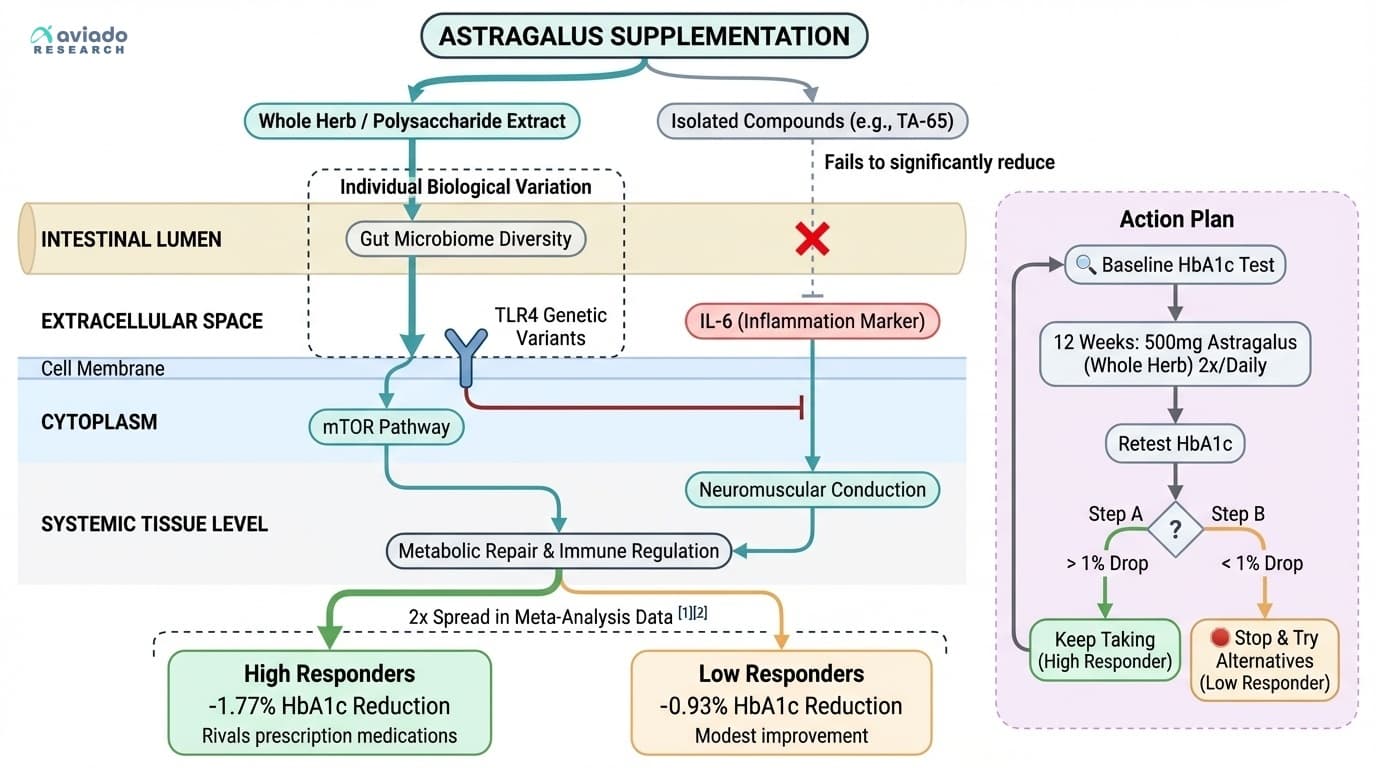
Astragalus Cuts HbA1c by Up to 1.77% — But Only If You're in the Right Half of Responders
What Meta-Analyses Reveal About Astragalus, Blood Sugar, and Why Your Body May Be the Real Variable
Diagram glossary
- glucose:
- A simple sugar in the blood that serves as the body's primary energy source.
- IL-6:
- A signaling protein and cytokine that regulates immune responses and inflammation in the body.
- mTOR:
- A central protein kinase that regulates cellular metabolism, growth, and survival.
- polysaccharide:
- A complex carbohydrate found in astragalus extracts that can influence metabolic health.
- TA-65:
- An isolated compound derived from the astragalus plant, often used in supplements.
- TLR4:
- An immune receptor whose genetic variations can affect individual responses to astragalus supplements.
Conclusions
Astragalus stands out not as a generic blood sugar supplement, but as a high-variance tool: some people see dramatic improvements in HbA1c, while others see little or no change. The only way to know if you’re benefiting is to test your own response. The form you choose matters — whole-root or polysaccharide extracts have the best evidence, not isolated compounds like TA-65. For those who respond, astragalus can be a cornerstone supplement for metabolic health, with benefits that may extend beyond blood sugar to inflammation and tissue repair.
Most astragalus research to date has been conducted in Chinese populations, with less data on Western users. The exact factors driving individual response (genetics, microbiome, formulation differences) are not fully understood. Many studies use combination therapies, making it hard to isolate astragalus effects. The optimal dose and bioavailability in different formulations need further study. Direct head-to-head trials between whole-herb and isolated extracts are still limited.
Track this in your stack
See how astragalus relates to your health goals and monitor changes in your biomarkers over time.
Sources (6)
This article informs how supplementation moves 1 marker.
Each biomarker page clusters supplements, ranges, and the evidence behind every score. Useful when you're starting from a number, not a goal.