
Peak Mental Performance: The Comprehensive Guide for Men 18–39
How to Protect and Upgrade Your Brain for Life’s Most Demanding Decade
Here's something unexpected: your brain uses 20% of your body's energy despite being just 2% of your weight.
Most young men focus on building muscle while ignoring their most important asset. But the choices you make in your 20s and 30s determine whether your brain stays sharp or starts declining decades earlier than necessary.
Your brain is still developing into your mid-20s. Support it now and you build "cognitive reserve" that protects you for life. Ignore it and even minor blood sugar or blood pressure issues start damaging your brain by your 30s. The research shows men who optimize their brain health early perform better under stress and maintain focus longer.
The protocol is straightforward: take 2-3 grams EPA+DHA daily, 3-5 grams creatine, and 1-2 grams magnesium L-threonate. Add 150 minutes of aerobic exercise weekly. Track your Omega-3 Index (aim above 8%) and vitamin D (40-60 ng/mL). You'll see better memory and focus within weeks, plus protection that lasts decades.
- Omega-3 Index
- A blood test showing the level of omega-3 fats in your red blood cells, which reflects your brain's omega-3 status.
- EPA+DHA
- EPA (eicosapentaenoic acid) and DHA (docosahexaenoic acid) are the two key active omega-3 fatty acids found in fish oil; together they are the specific components measured and dosed in brain and heart health.
- Mane
- A branded brain function cognitive performance extract name used to identify a specific standardized product in clinical trials. Products with different brand names can use different plant parts, extr
- Magnesium L-Threonate
- A special form of magnesium that can cross the blood-brain barrier to support learning and memory, unlike other magnesium forms that don't reach the brain.
- DHA
- Docosahexaenoic acid, a type of omega-3 fat that makes up 30% of your brain's structural fats and is critical for memory and cognitive function.
- Phospholipid Form
- A specific way omega-3 fatty acids are packaged and delivered in a supplement, where the fats are bound to phospholipid molecules (the same type found in cell membranes), which research suggests allow
- RBC Magnesium
- A blood test that measures magnesium levels inside red blood cells (RBC stands for red blood cell), which gives a more accurate picture of your body's true magnesium status than a standard serum (bloo
- BDNF
- A protein that promotes the survival, growth, and adaptation of neurons in the brain.
- creatine
- An organic acid that helps supply energy to cells, particularly muscle and brain tissue.
- CRP
- A protein produced by the liver that serves as a marker for systemic inflammation.
- EPA
- An omega-3 fatty acid that reduces inflammation and supports cardiovascular and brain health.
- glucose
- A simple sugar that serves as the primary energy source for the brain and body.
Right now, you are in the most critical years for building and protecting your brain’s long-term performance. This isn’t just about being sharp today. The habits and choices you make in your 20s and 30s determine whether your brain will be resilient or vulnerable as you age. Research shows that cardiovascular risk factors — like high blood pressure, blood sugar, and cholesterol — already start shaping your brain by your early 30s. These factors predict measurable brain volume loss and damage to the wiring of your brain by your 50s [1].
Your prefrontal cortex, the part of your brain responsible for impulse control, planning, and complex thinking, is still maturing into your mid-20s. Support during this phase is key — you’re literally laying down the neural infrastructure you’ll rely on for decades. Meanwhile, BDNF, the protein that drives your brain’s ability to adapt and grow, starts declining around age 30. Keeping BDNF high with exercise and nutrition in your younger years can delay cognitive decline by as much as a decade [2].
Depression and anxiety are also most common in men under 35, often as a result of inflammation and nutrient deficiencies. And in today’s world, digital overload is fragmenting attention, with studies showing real changes in your brain’s structure if you’re a heavy multitasker [3]. The earlier you act, the greater your advantage — both now and years down the line. Next, we’ll break down the biomarkers that can give you a direct readout on your brain’s health.
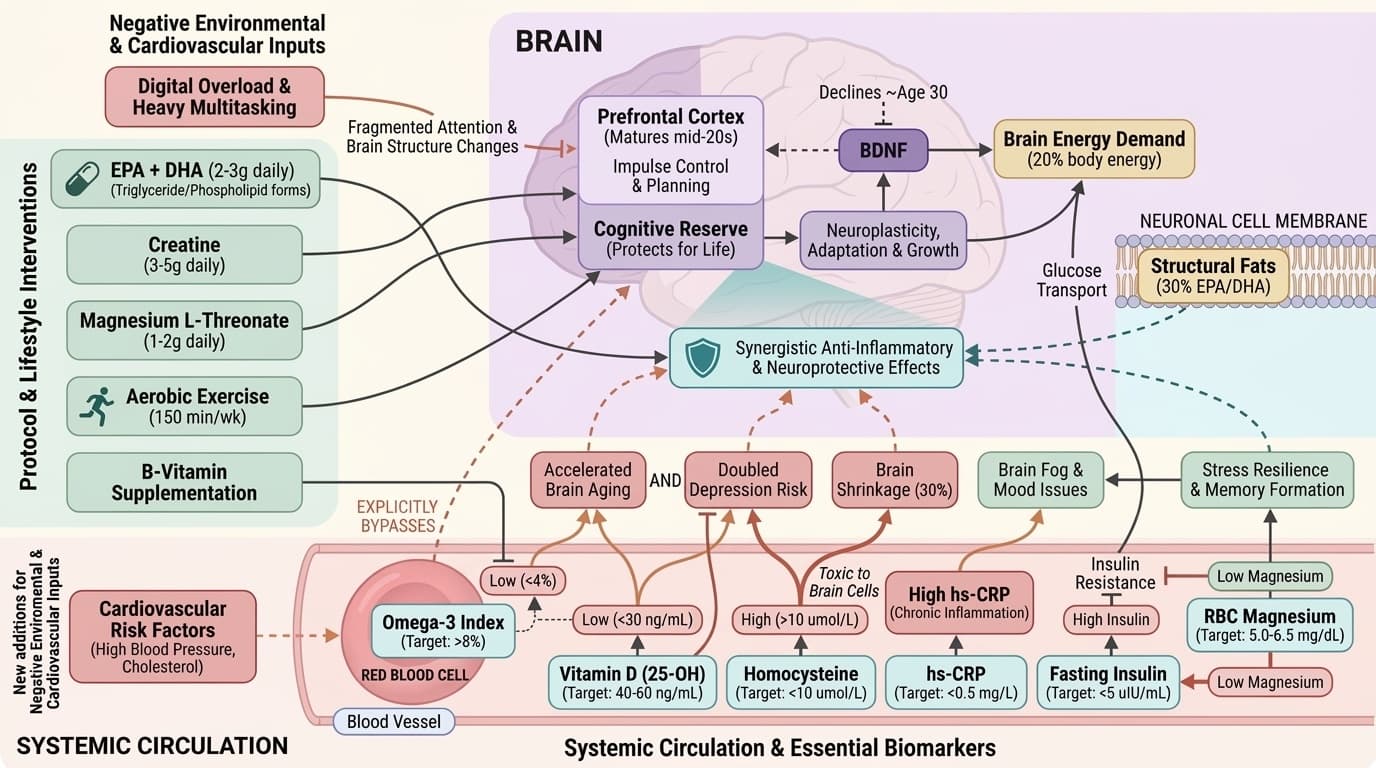
Track these six biomarkers to get a clear picture of your brain's current and future health. Most young men have never tested these, but they predict cognitive performance better than how you feel day-to-day.
Your Omega-3 Index measures EPA and DHA in red blood cell membranes. Aim for above 8%. Most young men score 4-5%, and dropping below 4% doubles depression risk and accelerates brain aging. You can move this number within 8-12 weeks of supplementation.
Vitamin D (25-OH) should be 40-60 ng/mL for optimal brain function. Over 40% of young men fall below 30 ng/mL, especially office workers. Low vitamin D doubles depression risk and impairs neuroplasticity.
Homocysteine above 10 umol/L is toxic to brain cells and speeds brain shrinkage by 30%. B-vitamin supplementation can normalize this marker and slow brain aging. hs-CRP measures inflammation - keep it under 0.5 mg/L since chronic inflammation triggers brain fog and mood issues.
Fasting insulin should stay below 5 uIU/mL. Higher levels indicate insulin resistance, which starves your brain of glucose and slows cognitive processing. RBC magnesium between 5.0-6.5 mg/dL supports stress resilience and memory formation.
These markers interact - low magnesium raises inflammation, poor omega-3 status worsens blood sugar control. Test all six to see the complete picture.
EPA and DHA make up 30% of your brain's structural fats. When your Omega-3 Index drops below 4%, you face doubled depression risk and accelerated brain aging. The optimal target is above 8% - a level that protects mood, memory, and cognitive flexibility.
Supplement with 2-3 grams combined EPA and DHA daily. A meta-analysis of 26 randomized trials showed this dose significantly improves depression scores within 8-12 weeks. Your Omega-3 Index will rise in parallel, giving you a measurable marker of progress.
Form matters for absorption. Triglyceride or phospholipid forms outperform ethyl ester. For brain health, maintain at least a 1:1 EPA:DHA ratio. Omega-3s work synergistically with vitamin D and magnesium, amplifying anti-inflammatory and neuroprotective effects.
This is especially critical if you're vegetarian, have family history of depression, or rarely eat fatty fish. Most young men get virtually zero EPA and DHA from their diet, making supplementation essential for optimal brain function.
Your brain burns through ATP rapidly during intense mental work. Creatine acts as an energy buffer, recycling ATP to maintain cognitive performance under pressure. Randomized trials show 3-5 grams of creatine monohydrate daily improves working memory by 5-15% and boosts processing speed, especially during sleep deprivation.
The mechanism involves boosting phosphocreatine stores in brain cells, supporting rapid ATP regeneration when neurons fire intensely. Benefits typically appear within 2-4 weeks of consistent supplementation.
Creatine monohydrate is the gold standard - it's the most studied and cost-effective form. It pairs well with magnesium since both support cellular energy metabolism. For men with high cognitive demands, irregular sleep, or heavy training schedules, creatine provides measurable resilience against mental fatigue.
Vegetarians and vegans see even greater benefits since their baseline creatine levels are lower. The supplement is safe for healthy individuals, though those with kidney disease should avoid it.
Most magnesium supplements don't reach your brain. Only magnesium L-threonate crosses the blood-brain barrier and actually raises brain magnesium levels. This matters because optimal RBC magnesium (5.0-6.5 mg/dL) is essential for learning, memory, and stress regulation.
The MAGRITTE study found 1-2 grams of magnesium L-threonate daily improved executive function and working memory within 4-8 weeks. This form modulates NMDA receptors critical for synaptic plasticity - your brain's ability to form new connections and adapt.
Magnesium L-threonate also reduces neuroinflammation and regulates sleep cycles. Taking it in the evening can improve sleep quality, which feeds back into better memory consolidation and mood stability.
Most young men run low on magnesium due to stress, processed diets, or intense training. Brain fog, sleep issues, and stress overload often signal deficiency. This supplement stacks particularly well with omega-3s and exercise for maximum neuroplasticity benefits.
Lion's Mane contains unique compounds - hericenones and erinacines - that boost Nerve Growth Factor (NGF). This protein drives the growth and repair of brain cells, making Lion's Mane one of the few supplements that actually stimulates neurogenesis.
A double-blind trial found 500-1000 mg daily of Lion's Mane extract for 16 weeks significantly improved cognitive function scores. The changes emerge gradually over 2-4 months as new neural connections form and existing ones strengthen.
Unlike omega-3s or magnesium that support existing brain function, Lion's Mane actively promotes brain repair and growth. This makes it valuable during periods of intense learning, stress recovery, or long-term cognitive protection.
Lion's Mane works synergistically with exercise and omega-3s, all of which boost neuroplasticity through different pathways. It's well-tolerated by most people, though those with mushroom allergies should avoid it. For young men facing high cognitive demands, it offers a unique pathway to enhanced brain adaptability.
Aerobic exercise is the most powerful intervention for brain health - more effective than any supplement. Just 150 minutes weekly (five 30-minute sessions) boosts BDNF by 200-300%, increases new brain cell growth in the hippocampus, and improves cerebral blood flow.
The benefits start immediately. A single 30-minute workout improves executive function and focus for up to four hours. Over months, exercise builds cognitive reserve that makes your brain more resilient to stress, sleep loss, and aging.
Exercise amplifies every supplement's effects. It enhances omega-3 absorption, increases magnesium utilization, and synergizes with Lion's Mane for maximum neuroplasticity. No supplement can match exercise's comprehensive brain benefits.
For young men experiencing brain fog, mood swings, or attention issues, exercise often provides the fastest reset. It's free, immediately available, and delivers both acute performance benefits and long-term protection.
Your brain sends early warning signals when it needs support. Persistent brain fog that doesn't resolve with adequate sleep often indicates inflammation, blood sugar dysregulation, or deficiencies in vitamin D, B12, omega-3s, or iron. Don't dismiss this - get comprehensive blood work.
Mood instability and rising anxiety without clear external causes may reflect neuroinflammation or shortages in neurotransmitter building blocks like tryptophan, tyrosine, B6, and folate. These mood changes often precede noticeable cognitive decline.
If your mental performance crashes under stress, suspect depleted magnesium, elevated cortisol, or HPA axis dysfunction. Men in high-pressure jobs or intense training are especially vulnerable to this pattern.
Memory lapses, difficulty concentrating, or feeling mentally "slow" can signal insulin resistance affecting brain glucose metabolism. Even mild blood sugar irregularities impact cognitive function before showing up in standard diabetes screening.
Catching and correcting these early signals protects your long-term brain health. The interventions that fix these issues - proper nutrition, targeted supplementation, exercise, and stress management - are most effective when started early.
Building optimal brain health requires tracking biomarkers and stacking proven interventions. Start by testing your Omega-3 Index, vitamin D, homocysteine, hs-CRP, fasting insulin, and RBC magnesium. These numbers guide your specific actions.
The evidence-backed foundation stack for men 18-39: - EPA+DHA: 2-3 grams daily (triglyceride or phospholipid form) - Creatine monohydrate: 3-5 grams daily - Magnesium L-threonate: 1-2 grams daily (evening) - Lion's Mane extract: 500-1000 mg daily - Aerobic exercise: minimum 150 minutes weekly
Expect measurable changes on this timeline: Omega-3 Index and mood improvements within 8-12 weeks, enhanced memory and stress resilience from creatine within 2-4 weeks, better sleep and focus from magnesium within 4-8 weeks, and neuroplasticity benefits from Lion's Mane over 2-4 months.
Exercise amplifies everything - it's non-negotiable. Retest biomarkers every 3-6 months to track progress and adjust doses. Your brain is your most valuable asset. These investments compound over decades, building cognitive reserve that keeps you sharp when others decline.
Peak Mental Performance: The Comprehensive Guide for Men 18–39
How to Protect and Upgrade Your Brain for Life’s Most Demanding Decade
Diagram glossary
- BDNF:
- A protein that promotes the survival, growth, and adaptation of neurons in the brain.
- creatine:
- An organic acid that helps supply energy to cells, particularly muscle and brain tissue.
- CRP:
- A protein produced by the liver that serves as a marker for systemic inflammation.
- DHA:
- An omega-3 fatty acid essential for brain development, cognitive function, and cellular health.
- EPA:
- An omega-3 fatty acid that reduces inflammation and supports cardiovascular and brain health.
- glucose:
- A simple sugar that serves as the primary energy source for the brain and body.
- Homocysteine:
- An amino acid in the blood linked to cardiovascular and neurodegenerative disease risk.
- insulin:
- A hormone produced by the pancreas that regulates blood glucose levels and metabolism.
- RBC:
- A red blood cell responsible for transporting oxygen from the lungs to body tissues.
- threonate:
- A vitamin C metabolite often bound to magnesium to enhance brain absorption and function.
- Triglyceride:
- A type of fat found in the blood used for long-term energy storage.
Conclusions
Your 20s and 30s are the prime time to invest in your brain’s future. By tracking the right biomarkers and stacking targeted interventions — omega-3s, creatine, magnesium L-threonate, Lion’s Mane, and regular aerobic exercise — you can optimize your mental performance today while protecting your brain for decades ahead. Early action compounds, building a cognitive reserve that keeps you sharp, resilient, and ahead of the curve. Keep monitoring, stay proactive, and remember that small changes now lead to major advantages later.
While the interventions covered are strongly supported by current research, most studies are short- to medium-term and may not reflect lifetime outcomes. Individual responses vary: genetics, pre-existing conditions, and lifestyle factors can influence results. Some biomarker targets are drawn from population studies and may not account for all demographic differences. Supplements are not a substitute for medical care in cases of serious mental health conditions. As always, consult a healthcare professional before starting new supplements, especially if you have underlying health issues.
Track this in your stack
See how omega 3 relates to your health goals and monitor changes in your biomarkers over time.
Sources (10)
This article informs how supplementation moves 4 markers.
Each biomarker page clusters supplements, ranges, and the evidence behind every score. Useful when you're starting from a number, not a goal.
% EPA + DHA in red-blood-cell membranes. Target >= 8% for cognitive protection; most US adults sit at 4-5%.
High-sensitivity C-reactive protein. > 3 mg/L associated with chronic systemic inflammation affecting the brain and vasculature.
3-month average blood glucose. Levels >= 5.7% associated with cognitive decline independent of diabetes diagnosis.