
NAC's Mechanism Is Not What You Think: Why 'Antioxidant' Is the Wrong Label
How Cysteine, Glutathione, and Your Biology Decide If NAC Does Anything for You
You may have heard that NAC is an antioxidant, but the real story is much more interesting—and more relevant to your everyday health.
NAC’s power lies not in directly fighting free radicals, but in restoring the raw material your body desperately needs to make its own master antioxidant, glutathione. Whether you feel a boost from NAC or nothing at all depends entirely on your personal biology, and the science shows you can test and tailor it for yourself. Let’s break down what NAC really does, who benefits, and how you can use it to upgrade your resilience, brain, and long-term health.
- GPX4 (Glutathione Peroxidase 4)
- An enzyme that uses glutathione to neutralize certain harmful molecules; its activity is linked to cell protection, especially against ferroptosis.
- Hydrogen sulfide (H2S) signaling
- A gas produced in the body that acts as a signaling molecule; emerging data suggest NAC may boost H2S, adding another way it could help cells.
- F2-isoprostanes
- Molecules formed when fats are damaged by oxidative stress; a reliable blood or urine marker to measure the effect of antioxidants like NAC.
- 8-OHdG
- A marker of oxidative DNA damage in the body, used to track how much oxidative stress you’re experiencing.
- Glutathione
- A critical antioxidant made inside your cells that protects against oxidative stress; its levels determine if NAC will have any effect.
- Oxidative Stress
- Cellular damage caused by reactive oxygen species (free radicals) overwhelming antioxidant defenses.
- Growth Differentiation Factor 15 (GDF-15)
- Top aging biomarker per meta-analysis. Stress-responsive cytokine elevated in aging, cancer, heart failure, and chronic disease.
- acetylcysteine
- A synthetic form of cysteine used as a supplement and glutathione precursor.
- CBS
- An enzyme that converts homocysteine to cystathionine in the transsulfuration pathway.
- CSE
- An enzyme that produces hydrogen sulfide and cysteine during sulfur metabolism.
Imagine you’re picking up a supplement because you heard it could help with energy, focus, or recovery. Maybe a friend swears by it. Maybe you saw it recommended for immune support or brain health. You find a bottle of NAC—N-acetylcysteine—and right on the label it says 'antioxidant.' That sounds straightforward, right? You picture NAC roaming your body, zapping free radicals and cleaning up the mess. But here’s the twist: that’s not how it works at all.
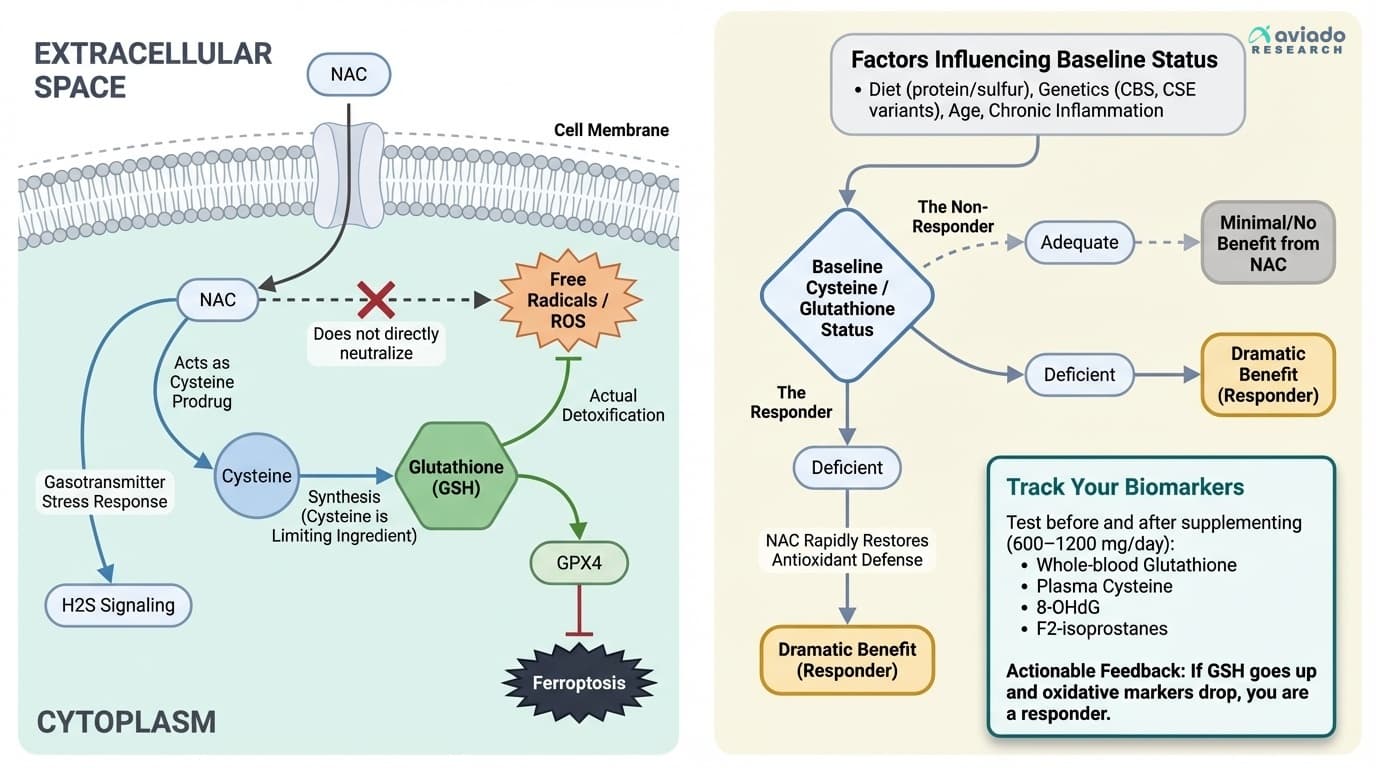
What NAC actually does is quieter, but far more fundamental. When you swallow NAC, it’s not acting as your body’s frontline defender against oxidative stress. Instead, it heads into your tissues and quietly donates cysteine—a building block your cells are often desperately short on. Your body takes that cysteine and, behind the scenes, uses it to manufacture glutathione. If antioxidants are the emergency fire crew, glutathione is the chief, running the entire operation. It neutralizes free radicals, repairs damaged molecules, and keeps your cells safely in balance. NAC is simply handing over the keys to make more glutathione.
So, what does this mean for you? It means that NAC is only as powerful as your body’s need for extra cysteine. If you’re already full up—thanks to a protein-rich diet, strong genetics, and low inflammation—taking more NAC is like pouring water into a glass that’s already full. Nothing changes. But if your body is running low, maybe because of poor nutrition, chronic stress, aging, or illness, NAC can rapidly refill your reserves and unleash your body’s natural defense system. This explains why some people feel a surge of energy, clarity, or resilience from NAC, while others notice nothing at all. The real story is about personal biology, not just a blanket antioxidant effect.
So, if you’ve ever wondered why one supplement seems to work wonders for your friend but does nothing for you, the answer may be hiding in your own glutathione and cysteine levels. That brings us to why this matters for your health and what you can measure to know if NAC might benefit you.
Think about the last time you felt drained after a tough week, or foggy after a night of poor sleep. Maybe you bounced back quickly, or maybe that edge lingered for days. At the core of your body’s ability to recover, think clearly, and fight off illness sits something most people never measure: your glutathione reserves.
Glutathione is made of three building blocks—glutamate, glycine, and cysteine. Of these, cysteine is the rarest and most precious. Your body can only make so much, and when you run low, everything from detoxification to brain function starts to suffer. This is why NAC, by donating cysteine, is so important. It doesn’t just boost your antioxidant defenses—it supports the very molecules that let your cells survive stress, clear toxins, and keep inflammation under control.
The need for cysteine and glutathione isn’t the same for everyone. Genetics play a major role. Certain people have inherited differences in the pathways that recycle and use cysteine. For example, genes like CBS and CSE, which are part of what’s called the transsulfuration pathway, can make you less efficient at producing glutathione. Age matters too. As you get older, your body’s ability to make and recycle glutathione naturally declines. Chronic inflammation, which can come from anything from poor diet to environmental toxins to overtraining, burns through glutathione faster than you can make it.
Diet is another big player. If you eat plenty of protein, especially sulfur-rich foods like eggs, poultry, beans, and cruciferous vegetables, you’re more likely to have a solid supply of cysteine. But if you’re vegan or vegetarian, or if you eat a limited diet, you might be running a quiet deficit—and that deficit shows up as fatigue, slower recovery, or brain fog.
For athletes, people under chronic stress, those with autoimmune conditions, or anyone living in a polluted environment, the demand for glutathione is even higher. NAC can be a game changer for these groups because it restores your ability to keep up with oxidative and inflammatory stress. But for others, especially people with robust diets and genetics, NAC may do little or nothing.
This isn’t just about energy or performance. Low glutathione is linked to higher risk of neurodegenerative diseases, weaker immune response, and faster aging. So figuring out whether your body is running low on cysteine and glutathione is one of the smartest, most actionable steps you can take. How do you know? That’s where biomarkers come in.
You can only manage what you measure. Most people take supplements hoping for a benefit, but with NAC, you can actually track if it’s working—no guesswork required.
There are three main biomarkers that reveal your glutathione and cysteine status and your level of oxidative stress. The first is whole-blood glutathione. This test tells you how much of your body’s master antioxidant you have on board. For most healthy adults, you want your glutathione levels to be in the upper half of your lab’s reference range. If you’re below that, you’re likely under oxidative stress, and NAC might help you restore that buffer.
The second marker is plasma cysteine. This shows how much raw material your body has to make glutathione. Low cysteine means you’re at risk for running out of antioxidant defenses, especially if you’re exposed to inflammation, infection, or environmental toxins. Optimal plasma cysteine typically sits between two hundred and fifty and three hundred micromoles per liter, but your lab’s range may differ. If you’re below this, that’s a sign your body might benefit from NAC.
The third category is oxidative stress markers. Two of the most widely used are 8-hydroxy-2'-deoxyguanosine, known as 8-OHdG, and F2-isoprostanes. These are molecules you can measure in urine or blood that tell you if your cells are being damaged by free radicals. Lower is always better. For 8-OHdG, you want to see values below eight nanograms per milligram of creatinine. For F2-isoprostanes, healthy adults are typically below thirty-five picograms per milliliter. If your levels are above these cutoffs, your cells are under oxidative attack, and that’s when boosting glutathione—via NAC—can be most helpful.
Why does this matter? Because if your glutathione and cysteine are already high and your oxidative stress is low, taking NAC will probably do little. But if you’re running low or under high stress, supplementing NAC can measurably restore your antioxidant capacity, lower your oxidative damage, and improve your resilience.
The best way to use these biomarkers is to test before you start NAC, then again after four to six weeks. If your glutathione rises and your oxidative stress markers drop, you’re a responder. If not, you may want to focus on other interventions. This approach lets you tailor your supplement routine based on real, personal biology.
So, what does the science say about how NAC works and who actually benefits? Let’s dig into the mechanisms and evidence.
If you imagine your cells as tiny factories, glutathione is the cleaning crew, the quality control inspector, and the first responder rolled into one. NAC’s job is to make sure your cells never run out of the supplies they need to keep these systems running.
First, the basics. NAC supplies cysteine, the limiting ingredient in building glutathione. When your cells get more cysteine, they ramp up glutathione production. This increases your body’s ability to neutralize free radicals, repair oxidative damage, and support detoxification. That’s the classic story.
But NAC’s benefits go beyond just making more glutathione. Emerging research, especially in the last five years, has shown that NAC can also influence your cell’s ability to prevent a type of cell death called ferroptosis. Ferroptosis is triggered by iron-driven buildup of lipid peroxides—damaged fats that can destroy cells, especially in sensitive tissues like your brain, kidneys, and liver.
The key player here is an enzyme called glutathione peroxidase four, or GPX4. GPX4 uses glutathione to neutralize these dangerous lipid peroxides and keep cells alive. When you have enough cysteine and glutathione, GPX4 can do its job and block ferroptosis. But when you’re deficient, cells become vulnerable to this damaging process. Recent studies, including a major trial published in 2024 that followed nearly twenty-five hundred adults, found that boosting cysteine with NAC improves GPX4 activity, reduces ferroptosis, and protects tissues from oxidative injury.
There’s another layer too. NAC is now known to influence hydrogen sulfide—often abbreviated as H two S—a gas that acts as a signaling molecule inside your body. Hydrogen sulfide is involved in everything from cell survival under stress to blood vessel relaxation and even brain function. Some evidence suggests that NAC can increase production of hydrogen sulfide, making your cells more resilient to stress and injury. This opens up entirely new possibilities for NAC in supporting brain health, longevity, and immune resilience.
So, the next time you hear NAC called just an antioxidant, remember: it’s really a master regulator, working through glutathione, GPX4, and hydrogen sulfide to help protect your cells from damage, disease, and the wear and tear of everyday life.
The big question is: how can you use this knowledge in your own routine? That’s where dosing, timing, and personalization come in.
If you’re ready to try NAC, the good news is that it’s one of the easiest supplements to personalize and track. But getting the most benefit means understanding how to dose, when to take it, and how to monitor your own response.
Most clinical research and expert reviews recommend a daily dose of six hundred to twelve hundred milligrams of NAC, split into two doses. You might take six hundred milligrams in the morning and another six hundred in the evening. This helps keep your cysteine levels stable throughout the day, giving your cells a steady supply to make glutathione.
For best absorption, take NAC on an empty stomach or at least one hour before eating. Food, especially protein-rich meals, can compete for absorption and reduce how much NAC gets into your system. If you’re using NAC for athletic recovery, brain support, or immune function, timing your doses around periods of higher stress or after intense exercise may help maximize benefits.
Before you start, get your baseline biomarkers: whole-blood glutathione, plasma cysteine, and a marker of oxidative stress like 8-OHdG or F2-isoprostanes. These tests are increasingly available through functional medicine clinics or direct-to-consumer labs. After four to six weeks of consistent NAC supplementation, retest. If you see glutathione rise and oxidative stress drop, you know you’re responding. If nothing changes, NAC may not be necessary for you right now—and you can save your time and money, or focus on other interventions.
Some people are at higher risk for low cysteine and glutathione, including vegans, older adults, those with chronic inflammation, or people exposed to high levels of pollution or toxins. If you fall into these groups, you might benefit more from ongoing NAC support. Others may only need it during periods of acute stress, illness, or recovery.
It’s also wise to cycle NAC—taking breaks every eight to twelve weeks, especially if you’re healthy and not under acute stress. This helps your body maintain its own regulatory balance.
Lastly, quality matters. NAC is a relatively simple molecule, but because of regulatory uncertainty in some countries, not all products are created equal. Choose brands that provide independent third-party testing and have a track record of purity and potency.
That covers how to supplement NAC with evidence on your side. But supplements are only part of the story. Your lifestyle choices play a huge role in supporting your body’s glutathione system.
Picture your daily routine. Maybe you exercise regularly, try to eat well, and get enough sleep—or maybe that’s a work in progress. No matter where you start, there are powerful ways to support your cysteine and glutathione status without ever opening a supplement bottle.
First, focus on protein intake. Your body needs a steady supply of amino acids to make glutathione, and cysteine is found in highest concentrations in sulfur-containing proteins. Eggs, poultry, beef, fish, yogurt, and legumes are all excellent sources. Aim for at least one point two grams of protein per kilogram of body weight daily if you’re active, or one gram per kilogram if you’re less active. For vegetarians and vegans, include plenty of lentils, beans, quinoa, and especially cruciferous vegetables like broccoli, cauliflower, and Brussels sprouts, which provide both protein and sulfur compounds to support cysteine production.
Second, prioritize foods rich in micronutrients that help recycle glutathione. Selenium, found in Brazil nuts, seafood, and mushrooms, is crucial for the function of GPX enzymes, including GPX4. Vitamin C from citrus, berries, and peppers helps regenerate spent glutathione so it can keep working. Alpha-lipoic acid, present in spinach, tomatoes, and organ meats, also plays a supporting role in maintaining healthy glutathione levels.
Exercise is another major lever. Regular moderate-to-intense physical activity—like brisk walking, running, cycling, or strength training—stimulates your body to make more glutathione. But overtraining, especially without enough recovery or protein, can deplete your reserves and increase oxidative stress. Listen to your body, and match your exercise volume to your recovery capacity.
Sleep is the third pillar. Deep, restorative sleep is when your cells perform most of their repair work, including recycling glutathione. Aim for at least seven hours per night, and prioritize a consistent sleep schedule. Chronic sleep deprivation quickly ramps up oxidative stress and burns through your antioxidant supplies.
Finally, minimize exposures that tax your glutathione system. Tobacco smoke, excess alcohol, processed foods, and pollution all increase your need for glutathione. If you can’t avoid these entirely, supporting your system with a nutrient-dense diet, healthy sleep, and targeted supplementation when needed is the next best thing.
Lifestyle sets the foundation, so even if you choose to supplement with NAC, you’ll get better results by pairing it with smart nutrition, movement, and recovery. But how do you know when your system is under strain and might need extra help? That’s where early warning signs come in.
Maybe you’ve noticed that your energy just isn’t what it used to be, or you take longer to recover from workouts or illness. Maybe you get more headaches, brain fog, or you’re catching every cold that goes around. These can all be signs that your body’s antioxidant defenses are running low.
One of the earliest and most subtle signs is persistent fatigue that doesn’t improve with rest. This is often your body’s way of signaling that cells are under oxidative stress and struggling to keep up with repair and detoxification. Other red flags include increased sensitivity to environmental toxins—like feeling worse after being exposed to smoke, fumes, or certain foods—or noticing that your skin heals more slowly from cuts and bruises.
Brain fog, poor concentration, and mood swings can also be linked to low glutathione. Your brain is especially sensitive to oxidative stress, and studies have shown that people with lower glutathione are more prone to cognitive decline and slower processing speed.
Frequent infections or slow recovery from illness suggest that your immune system is not at full strength. Glutathione plays a direct role in supporting immune cell function and fighting off viruses and bacteria. If you find yourself getting sick more often than usual, it may be time to check your antioxidant status.
Lab markers can provide earlier and more objective warning signs. Elevated levels of 8-OHdG or F2-isoprostanes on your test results are clear signals that your body is dealing with more oxidative stress than it can handle. Low whole-blood glutathione or plasma cysteine are additional clues that you may benefit from NAC or glutathione-focused lifestyle changes.
If you’re experiencing any of these patterns—chronic fatigue, brain fog, slow recovery, frequent illness, or persistently elevated oxidative stress markers—it’s worth talking to your clinician about testing and possible NAC supplementation. The sooner you recognize these signals, the more effectively you can intervene and restore your body’s resilience.
So, what’s the big picture? How do you put all of this together into a practical approach that fits your life? That’s next.
Here’s the big takeaway: NAC isn’t a generic antioxidant pill. Its real value is in restoring cysteine and empowering your body to make more of its own master antioxidant, glutathione. Whether you feel dramatic benefits or nothing at all comes down to your baseline biology—your diet, genetics, age, and level of inflammation.
Instead of guessing, you can measure your glutathione, cysteine, and oxidative stress markers before and after supplementing. If you see improvements, you’re a responder and NAC may become a cornerstone of your routine. If not, you can shift your attention to other strategies, knowing you’re making decisions based on your own data.
NAC’s benefits extend far beyond neutralizing free radicals. By supporting glutathione, GPX4, and hydrogen sulfide signaling, you’re protecting your brain, supporting your immune system, and potentially slowing the aging process at a cellular level. For athletes, those under high stress, older adults, and anyone dealing with chronic inflammation or environmental exposures, NAC can be a powerful tool—especially when paired with a nutrient-dense diet, regular exercise, and good sleep.
If you choose to try NAC, start with six hundred to twelve hundred milligrams daily, split into two doses, and test your response. Prioritize the lifestyle habits that keep your antioxidant defenses strong, and watch for early warning signs that your system is under strain. Remember that supplement quality and regulatory status can vary, so choose reputable brands and stay informed about access in your region.
You have the tools to take control of your biology. By understanding your own numbers and listening to your body, you can make targeted, effective choices that support your energy, resilience, and long-term health. The science is there, and now the next step is yours.
NAC's Mechanism Is Not What You Think: Why 'Antioxidant' Is the Wrong Label
How Cysteine, Glutathione, and Your Biology Decide If NAC Does Anything for You
Diagram glossary
- acetylcysteine:
- A synthetic form of cysteine used as a supplement and glutathione precursor.
- CBS:
- An enzyme that converts homocysteine to cystathionine in the transsulfuration pathway.
- CSE:
- An enzyme that produces hydrogen sulfide and cysteine during sulfur metabolism.
- Cysteine:
- A sulfur-containing amino acid that is the rate-limiting precursor for glutathione synthesis.
- cysteine/glutathione:
- The metabolic relationship where cysteine serves as the limiting ingredient to produce antioxidant glutathione.
- GPX4:
- An antioxidant enzyme that uses glutathione to protect cell membranes from lipid peroxidation.
- H2S:
- A gaseous signaling molecule involved in regulating cellular protection and inflammation.
- hydrogen:
- The lightest chemical element, frequently involved in cellular redox reactions and molecular bonding.
- NAC:
- A supplement that acts as a prodrug to supply cells with cysteine.
- ROS:
- Highly reactive oxygen-containing molecules that can cause oxidative stress and cellular damage.
Conclusions
NAC is not a universal antioxidant; its main power is as a cysteine supplier for glutathione production, and its effects are highly individual. Measure your biomarkers before and after supplementation to know if you’re getting real benefits. With the right testing and personalized approach, NAC can be an effective tool—especially for those low in cysteine or glutathione.
Most studies on NAC rely on indirect markers or are conducted in specific clinical populations, which may not reflect the average healthy adult. There is only moderate evidence for the new hydrogen sulfide pathway, and individual response can be influenced by unmeasured genetic or dietary factors. Regulatory status may affect access in some regions.
Track this in your stack
See how nac relates to your health goals and monitor changes in your biomarkers over time.