
Berberine Lowers Blood Sugar and Cholesterol: What the Research Really Says
Imagine a supplement that sits quietly in your kitchen cabinet, yet has the scientific muscle to rival some prescription drugs for blood sugar and cholesterol.
That’s berberine—a yellow plant compound with decades of research under its belt. Today, we’ll walk together through what the evidence really says, how berberine works inside your body, and how you can use it safely to support your metabolic, heart, and gut health.
- Cholesterol, Total
- Total cholesterol, the sum of HDL, LDL, and VLDL cholesterol. elevated levels increase atherosclerotic cardiovascular disease risk.
- Triglycerides
- Triglycerides, the primary fat storage molecule in blood. elevated levels indicate metabolic dysfunction and increase cardiovascular risk.
- LDL Cholesterol (calc)
- LDL cholesterol, the "bad cholesterol" that deposits in artery walls. elevated LDL is the primary driver of atherosclerosis and heart disease.
- Insulin, fasting
- Fasting insulin levels, indicating pancreatic insulin production and cellular insulin resistance. Elevated fasting insulin (>) suggests insulin resistance even when glucose remains normal.
- Meta-Analysis
- A statistical technique combining results from multiple studies to find overall patterns.
Maybe you know someone who’s had a wake-up call at a recent doctor’s visit. Their cholesterol is creeping up. Blood sugar is hovering just above normal. The advice is always the same: try diet and exercise first, then maybe a medication if things do not improve. But what if there was something else, quietly waiting in the background—a natural compound with a track record as impressive as some prescriptions?
That’s berberine. It’s not a new health craze. It’s a deep yellow plant extract, used in traditional medicine across Asia for centuries, and now validated in dozens of modern clinical trials. If you’re tuning in while stuck in traffic or walking the dog, you might be wondering, does any supplement really match up to the hype? With berberine, the answer is surprisingly close to yes. The real surprise is not just in the numbers, but in how it works inside your body, and what that means for your daily life.
You might be juggling work, family, and the relentless stream of health advice in your feed. Berberine stands out because it offers a rare combination—measurable improvements in blood sugar, cholesterol, and even gut health, all backed by rigorous science. So what does this mean for you? That’s exactly what we’re about to unpack.
You don’t need to have a doctor’s diagnosis to care about your metabolic health. Maybe you just want to feel steady energy, keep your heart strong, and support your digestive system. These are not separate goals. They’re threads woven through your whole health story, and berberine targets each of them through overlapping biological pathways.
Let’s start with metabolism. When you eat, your body breaks down food into glucose, the main fuel for your cells. Insulin is the hormone that helps move that glucose out of your blood and into your muscles and liver. Over time, especially with modern diets or a more sedentary lifestyle, your cells can become less responsive to insulin. This is called insulin resistance. It means your pancreas has to pump out more insulin just to keep your blood sugar in check. Left unchecked, this can eventually tip you into prediabetes or type 2 diabetes—years before any symptoms show up.
But it’s not just about blood sugar. Insulin resistance often comes bundled with high LDL cholesterol, high triglycerides, and low HDL, creating a perfect storm for heart disease. What makes berberine unique is its ability to address this entire cluster—not just one piece at a time. It activates an enzyme called AMP-activated protein kinase, or AMPK. Think of AMPK as your body’s master energy switch. When it’s turned on, your cells burn more fat for energy, become more sensitive to insulin, and reduce the liver’s production of cholesterol and sugar. That’s why berberine can help both blood sugar and cholesterol, often at the same time.
There’s another layer, too. Berberine shapes your gut microbiome, the trillions of bacteria living in your digestive tract. A healthier microbiome supports smoother digestion, less inflammation, and even better metabolic control. So the next time you hear about a supplement that promises “total body support,” know that berberine is one of the few with evidence showing these interconnected benefits.
Why does this matter for you? Because metabolic, heart, and gut health are not just about preventing disease later. They’re about feeling your best today—steady energy, clear thinking, and healthy aging. And if your lifestyle changes alone have not moved the needle, berberine may give you a research-backed assist. Next, we’ll talk about how you can actually measure your progress.
You can’t fix what you don’t measure. Before starting any supplement, especially one as powerful as berberine, it’s smart to get a baseline. Here are the biomarkers you’ll want to track, what the numbers mean, and why they matter for your day-to-day health.
Start with fasting blood sugar. This is the amount of glucose in your blood after not eating for at least eight hours. Ideal fasting blood sugar is generally between seventy and ninety-nine milligrams per deciliter. Levels above one hundred can signal early insulin resistance, even if you feel fine. Why does this matter? Elevated fasting blood sugar means your body is struggling to manage glucose—even before you cross into “pre-diabetic” territory. Lowering this marker by just ten points, which is what berberine routinely achieves in studies, can significantly reduce your risk of complications down the road.
Next is LDL cholesterol, often called “bad” cholesterol. This is the type that can build up in your arteries and raise your risk for heart attack or stroke. Most guidelines suggest aiming for LDL below one hundred milligrams per deciliter, especially if you have other risk factors. Berberine has consistently lowered LDL by fifteen to twenty milligrams per deciliter in research, which is enough to move a borderline result back into a safe zone.
Total cholesterol and triglycerides are also worth watching. Total cholesterol below two hundred is considered optimal, but the ratio of total cholesterol to HDL, the “good” cholesterol, gives you a more nuanced picture. Triglycerides, a type of fat in your blood, should ideally be under one hundred fifty. Higher triglycerides often go hand in hand with insulin resistance and increase your cardiovascular risk. Berberine has been shown to reduce triglycerides by about twenty to thirty milligrams per deciliter after a few months of steady use.
So what’s the takeaway? Before you start berberine, get a fasting blood sugar, a full cholesterol panel including LDL and triglycerides, and keep a record. Repeat these every three months to track your progress. Numbers do not just tell your risk. They tell you if your current plan is working. That brings us next to the evidence-based protocol—how to actually take berberine for maximum benefit.
When it comes to supplements, the details matter. The studies showing real benefits from berberine are remarkably consistent about the dose, the timing, and the form. Here’s what the science says, and how you can put it into action in your routine.
Nearly every major clinical trial used plain berberine hydrochloride, the standard form you’ll find in most supplements. The magic dose is five hundred milligrams, taken with each major meal—breakfast, lunch, and dinner. That’s a total of fifteen hundred milligrams per day, split into three doses. Why not just take it all at once? Berberine has a relatively short half-life, which means it does not stay in your bloodstream for long. Taking it with every meal ensures steady levels and maximizes the metabolic benefits. In fact, people who took a single daily dose saw much weaker results.
So what can you expect? In studies, people with elevated blood sugar or cholesterol saw noticeable improvements within eight to twelve weeks. Fasting blood sugar typically dropped by about ten milligrams per deciliter. LDL cholesterol fell by fifteen to twenty points. These are not just statistical blips—they can move you out of a risk zone, or provide a buffer if your numbers are creeping up.
How does berberine actually work? It activates AMPK, your body’s metabolic master switch, which ramps up fat burning, improves insulin sensitivity, and reduces the liver’s production of cholesterol and glucose. It also slows the breakdown of carbohydrates in your gut, so you get a gentler rise in blood sugar after meals. This two-pronged effect—improving insulin action and reducing sugar spikes—sets berberine apart from most other supplements.
A quick note on formulation. Some brands now offer enhanced forms like berberine-phospholipid complexes or dihydroberberine, claiming better absorption. But most of the best studies used the plain hydrochloride form. Unless your healthcare provider recommends otherwise, stick to what’s proven.
What about side effects? Most people tolerate berberine well. The most common issue is mild digestive discomfort—nausea, cramping, or loose stools—especially in the first few days. Starting with just one or two doses daily and building up can help your system adjust. Do not exceed the studied dose, as higher amounts do not offer more benefit and may increase side effects.
Before you start, talk to your healthcare provider, especially if you’re already taking medicines for blood sugar or cholesterol. Berberine can interact with certain drugs, and it’s always best to have your plan reviewed. Now, let’s move beyond supplements to what you can control every day—your lifestyle levers.
Supplements can be powerful allies, but they work best as part of a bigger health strategy. If you want to maximize the benefits of berberine, pair it with evidence-based lifestyle habits that target the same metabolic pathways.
Start with movement. Regular physical activity, especially brisk walking or resistance training, increases your muscles’ demand for glucose. When you work your muscles—whether you’re lifting, walking, or even doing yard work—your body pulls more sugar out of your blood, independent of insulin. Even ten minutes of walking after meals can blunt the blood sugar spike and make the most of berberine’s effects. A 2013 study showed that three short walks after each main meal improved daily glucose control better than a single longer walk. That’s good news if you have a busy schedule.
Next is nutrition. Berberine works hand in hand with a diet that is rich in fiber, colorful vegetables, lean proteins, and healthy fats. Fiber slows down how quickly your body absorbs glucose, smoothing out blood sugar swings. Omega-3 fatty acids, found in fish, chia, and flaxseeds, support healthy cholesterol levels and reduce inflammation. Try to minimize added sugars and refined grains, as these quickly raise blood sugar and can overwhelm your system.
Sleep is your metabolic reset button. Poor or irregular sleep throws off your hormones, increases cravings, and makes your body less responsive to insulin. Aim for seven to eight hours of consistent, high-quality sleep per night. Studies show that even a few nights of disrupted sleep can worsen insulin resistance, undoing some of the gains you might get from supplements or exercise.
Stress management matters, too. Chronic stress raises cortisol, a hormone that signals your liver to release more glucose, keeping your blood sugar high even if you’re eating well. Short bursts of deep breathing, meditation, or time in nature can lower cortisol and support steadier blood sugar.
Finally, support your gut health. Probiotic-rich foods like yogurt, kefir, sauerkraut, or kimchi help keep your microbiome balanced. Since berberine also shapes your gut bacteria, combining it with healthy foods may amplify both digestive and metabolic benefits.
The bottom line? Use berberine as an add-on, not a replacement, for a healthy lifestyle. It’s most effective when your daily habits pull in the same direction. That brings us to something that often gets overlooked—early warning signs that your plan needs adjustment.
Even with the best plans, your body can send subtle signals that something is off before it shows up on a lab report. Recognizing these early warning signs helps you adjust your routine or seek help sooner, keeping you ahead of bigger problems.
One of the first signs of metabolic stress is energy swings. If you feel alert after a meal but crash hard an hour or two later, that rollercoaster often points to unsteady blood sugar. Sugar cravings in the afternoon or evening can be your body’s way of signaling that it is struggling to keep blood sugar stable without frequent snacks.
Pay attention to changes in your waistline. Adding an inch or two around your middle over a year, even if your weight is stable, often signals increased visceral fat—the kind that drives insulin resistance and inflammation. If you notice your pants fitting tighter at the waist or your belt moving a notch, it’s worth checking your fasting blood sugar and cholesterol.
Digestive changes can also be a clue. More frequent bloating, irregular bowel habits, or unexplained stomach discomfort might reflect shifts in your gut microbiome or how your body is processing food. Since berberine acts on both gut bacteria and carbohydrate absorption, these symptoms can signal both progress and, in some cases, the need to adjust your dose.
Don’t ignore persistent brain fog or trouble focusing. High blood sugar and cholesterol can slow blood flow to your brain, making it harder to concentrate or remember details. If you notice these symptoms, especially alongside metabolic risk factors, consider checking your biomarkers and talking with your healthcare provider.
Finally, watch for new or worsening side effects if you’re already on medication. Berberine can amplify the effects of some diabetes and cholesterol drugs, which can lead to low blood sugar or unexpected drops in cholesterol. If you notice shakiness, sweating, or dizziness after starting berberine, check with your doctor right away.
The message here? Your body is always talking to you, even before the numbers change. By keeping an eye on these early signs, you can make timely tweaks to your supplement routine, lifestyle, or medical care. Next, let’s bring together everything you’ve learned and outline your action plan.
If you’re looking for a supplement that goes beyond the hype, berberine stands out as a rare example backed by robust research. The evidence is clear. Taken in the right dose—five hundred milligrams with each meal—berberine can lower fasting blood sugar by about ten points and reduce LDL cholesterol by fifteen to twenty points within two to three months. These changes can move you out of the risk zone for diabetes and heart disease, or give you extra protection if your numbers are already trending high.
But the real story is not just about the numbers. Berberine works by activating your body’s own metabolic engine—making your cells more sensitive to insulin, decreasing sugar production in the liver, lowering cholesterol, and even improving your gut microbiome. These are not quick fixes. They’re sustainable changes that can support steady energy, sharper thinking, and healthier aging.
To use berberine safely, always check with your healthcare provider first, especially if you’re on medication. Get a baseline set of labs—fasting blood sugar, cholesterol, and triglycerides—before you start, and repeat them every three months. Use berberine as an add-on, not a substitute, for healthy habits. Move more, eat well, manage stress, and nurture your gut.
Remember, you do not have to wait until there is a problem to act. Small changes now can pay big dividends later. If you’re curious, start the conversation with your provider, track your progress, and listen to your body’s signals. Metabolic health is not only about avoiding disease. It’s about living your life with more energy, resilience, and confidence—one meal, one walk, and one smart choice at a time.
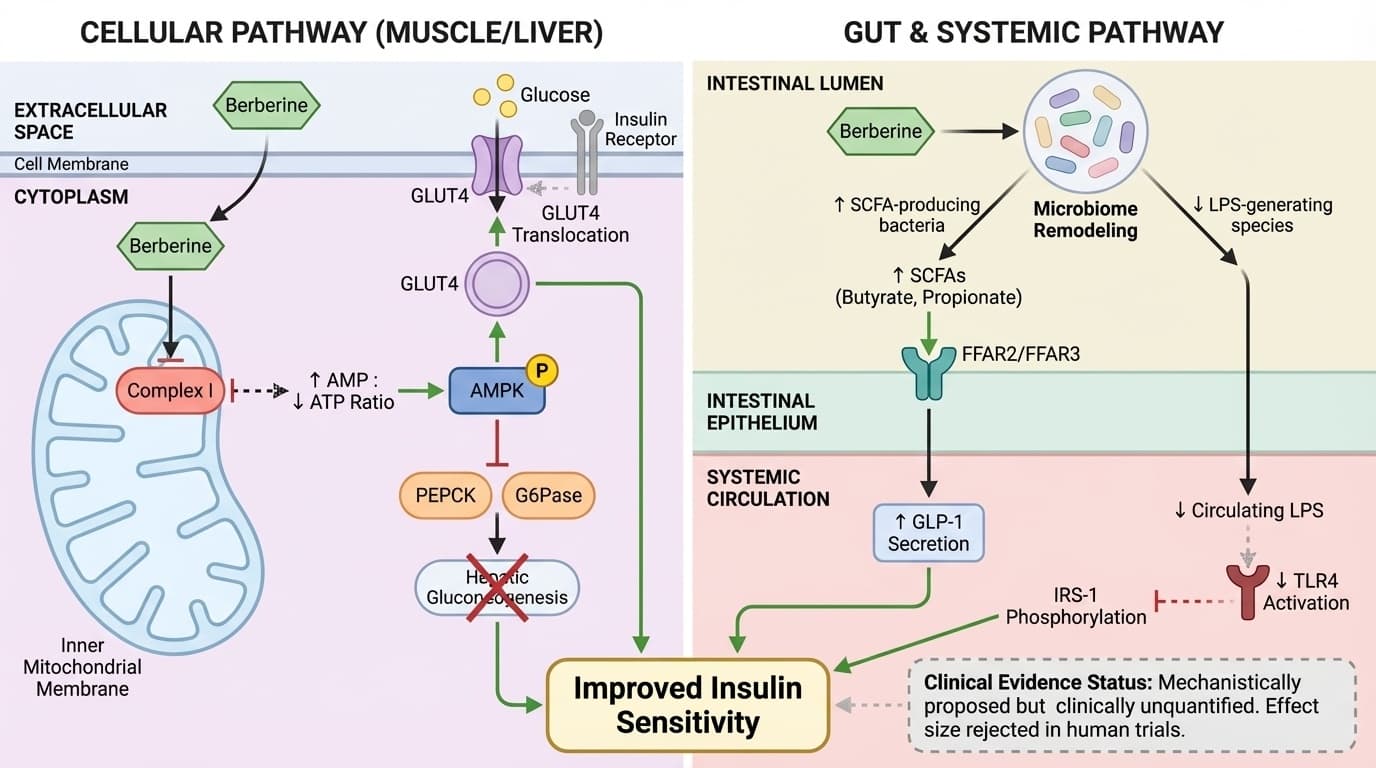
Berberine Works Through Your Gut Microbiome — Which Is Why It Works Differently for Everyone
The diagram should depict berberine entering a skeletal muscle or hepatocyte cell and inhibiting mitochondrial Complex I, leading to AMPK phosphorylation and downstream GLUT4 translocation and suppression of gluconeogenic enzymes (PEPCK, G6Pase). A secondary panel should illustrate berberine's action in the gut lumen, showing microbiome remodeling, increased SCFA production, GLP-1 release, and reduced LPS-driven TLR4/IRS-1 inflammatory interference, with both pathways converging on an improved insulin sensitivity outcome node marked as mechanistically proposed but clinically unquantified.
Diagram glossary
- AMPK:
- AMP-activated protein kinase, a cellular energy sensor and master metabolic regulator.
- ATP:
- Adenosine triphosphate, the primary molecule used to store and transfer energy in cells.
- Berberine:
- A plant compound that modulates metabolism and insulin sensitivity by activating AMPK.
- butyrate:
- A short-chain fatty acid produced by gut microbial fermentation that supports metabolic health.
- FFAR2/FFAR3:
- Free fatty acid receptors that mediate metabolic signaling from short-chain fatty acids.
- GLP-1:
- Glucagon-like peptide-1, an incretin hormone that stimulates insulin secretion and regulates appetite.
- glucose:
- A simple sugar that serves as the primary energy source for cellular metabolism.
- GLUT4:
- An insulin-regulated glucose transporter responsible for cellular glucose uptake in muscle and fat.
- insulin:
- A pancreatic hormone that regulates blood glucose levels by facilitating cellular glucose uptake.
- LPS:
- Lipopolysaccharide, a bacterial outer membrane component that triggers systemic inflammation and insulin resistance.
- PEPCK:
- Phosphoenolpyruvate carboxykinase, a key enzyme that regulates glucose production during hepatic gluconeogenesis.
- SCFA:
- Short-chain fatty acids produced by gut bacteria that influence host energy metabolism and immunity.
Track this in your stack
See how berberine relates to your health goals and monitor changes in your biomarkers over time.
Sources (3)
This article informs how supplementation moves 2 markers.
Each biomarker page clusters supplements, ranges, and the evidence behind every score. Useful when you're starting from a number, not a goal.
3-month average blood glucose. Levels >= 5.7% associated with cognitive decline independent of diabetes diagnosis.
Apolipoprotein B — particle count of atherogenic lipoproteins. Levels > 80 mg/dL associated with cardiovascular event risk independent of LDL-C.