
Metabolic Health for Young Men: Why Your Blood Sugar Matters More Than You Think
A Comprehensive Guide to Optimizing Glucose, Insulin, and Lifelong Health in Your 20s and 30s
Here’s a fact that might surprise you: about one in five men under forty already has blood sugar levels high enough to count as pre-diabetes, even if they feel perfectly healthy.
Most don’t realize it, because the usual checkups often miss the early warning signs. If you’re in your 20s or 30s, this matters more than you think. When your blood sugar starts creeping up, it can quietly set the stage for serious problems years down the line—like heart troubles, low testosterone, stubborn belly fat, and brain fog that slows you down at work or in the gym.
The problem is that early metabolic changes rarely show up as obvious symptoms. You might just notice you’re more tired after meals, or that your waist is growing while your weight stays the same. By the time traditional tests flag something, the groundwork for future health issues may already be in place. But here’s the good news: at your age, your body is still highly responsive. A few targeted changes—like tracking your fasting insulin, eating within a daily time window, and adding specific supplements—can make a huge difference, often within weeks.
Research suggests that young men can lower their risk of diabetes by more than half with lifestyle tweaks. For example, taking berberine (500 mg with meals), adding magnesium glycinate (300-400 mg daily), and using time-restricted eating (like a 16:8 schedule) are all evidence-backed ways to improve your metabolism right now. If you start these habits early, you’re not just dodging disease—you’re optimizing your energy, focus, and performance for decades to come.
- Magnesium Glycinate
- A specific form of magnesium supplement where the mineral is bonded to the amino acid glycine, making it easier for the body to absorb and gentler on the stomach than other magnesium forms.
- Time-Restricted Eating
- Eating all your meals within a set time window each day, like 8 hours, with the rest as fasting.
- Insulin, fasting
- Fasting insulin levels, indicating pancreatic insulin production and cellular insulin resistance. Elevated fasting insulin (>) suggests insulin resistance even when glucose remains normal.
- Zone 2 Cardio
- Steady, moderate exercise that’s easy enough to talk during but hard enough to raise your heart rate—supports fat burning and metabolic health.
- Pre-diabetes
- A condition where blood sugar is higher than normal, but not yet high enough for a diabetes diagnosis.
- Berberine
- A plant compound used as a supplement to support healthy blood sugar and insulin levels.
- Glucose
- Blood sugar level, the primary energy source for cells. Fasting glucose is normal, prediabetes, ≥126 suggests diabetes.
- glycinate
- An amino acid derivative commonly bound to minerals like magnesium to enhance absorption.
- HDL
- High-density lipoprotein is a beneficial blood cholesterol that helps remove other forms of cholesterol.
- HOMA
- A mathematical model used to assess insulin resistance and pancreatic beta-cell function.
- Insulin
- A pancreatic hormone that regulates blood sugar levels by facilitating cellular glucose uptake.
- Triglyceride
- A common type of fat found in the blood that stores excess energy.
If you’re in your 20s or 30s, you might think that metabolic disease is something you’ll only need to worry about decades from now. But the reality is different. National health data show that nearly one in five men aged 18 to 39 already meets the criteria for pre-diabetes, most without knowing it [1]. These men often feel healthy and pass standard checkups with no red flags. The problem is that traditional fasting glucose tests miss up to half of early cases, a pattern confirmed by Dr. Joseph Kraft’s research on over 14,000 patients [2].
Why does this matter? Because the earliest changes in how your body handles sugar and insulin start years before any symptoms or diagnosis. A study published in The Lancet revealed that men who developed insulin resistance before age 35 had nearly four times the risk of heart problems later in life, compared to those who stayed metabolically healthy [3]. This means that invisible changes happening now can shape your health for decades.
Understanding this early, silent shift is key. Your current habits—how you eat, move, and manage stress—are laying the groundwork for your future. If you wait until you notice symptoms, you’ve already lost the most effective window for change. Next, we’ll show how these trends play out specifically for men in their 20s and 30s, and what you can do about it.
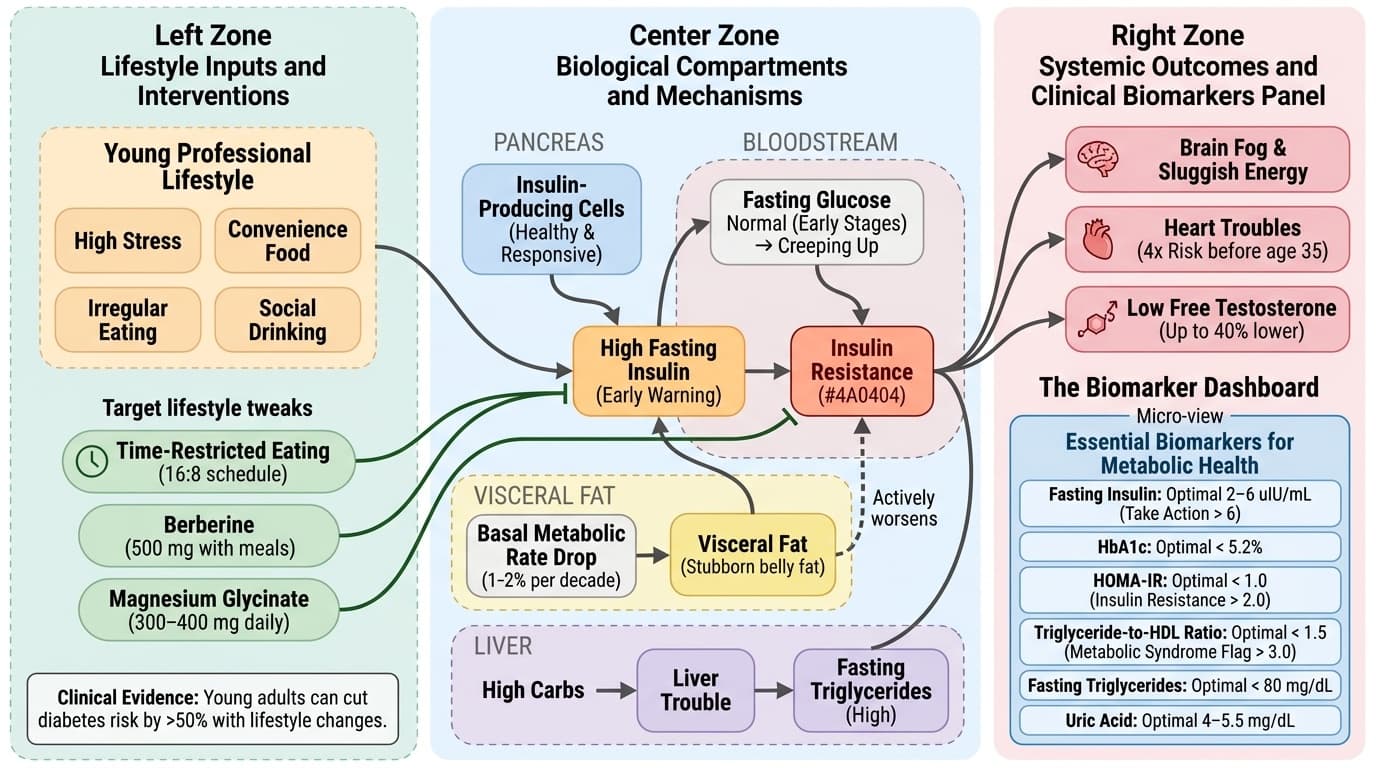
Your 20s and 30s are a turning point for metabolic health. Several unique factors come together during these years. First, there’s a direct connection between your metabolism and testosterone. Research shows that men with metabolic syndrome have up to 40% lower free testosterone than those with healthy metabolism [4]. This means that sluggish energy, low motivation, or trouble adding muscle could be early signs of metabolic issues, not just 'low T.'
Second, your body’s energy-burning power, or basal metabolic rate, starts to drop by about 1–2% per decade after your mid-20s. If you’re not paying attention, this small yearly dip can add up, leading to more visceral fat around your waist. Visceral fat is not just extra padding—it actively worsens insulin resistance.
Third, the typical lifestyle of a young professional—irregular eating, lots of convenience food, high stress, and frequent social drinking—actually sets you up for metabolic trouble. All these patterns drive your insulin levels higher, making it harder to stay lean and energetic.
The good news is that you still have a major advantage: your insulin-producing cells are healthy and responsive. Research from the Diabetes Prevention Program found that young adults can cut their risk of diabetes by more than half with simple lifestyle changes [5]. In the next section, we’ll break down the metabolic biomarkers you should be tracking now, and why they matter.
When it comes to catching metabolic issues early, you need more than the usual blood sugar check. Here are the key tests to ask for—and what your results really mean:
- Fasting Insulin: This is the earliest sign of trouble. The optimal range for young men is 2–6 uIU/mL. Many standard blood panels skip this test, but you can ask for it. High fasting insulin usually shows up 5–10 years before blood sugar starts to rise [2]. If your fasting insulin is above 6, it’s a sign to take action—even if your glucose is “normal.”
- HbA1c: This test shows your average blood sugar over three months. The optimal range is less than 5.2%. While labs may say up to 5.6% is normal, studies show your risk starts climbing above 5.2% [6].
- HOMA-IR: Calculated by multiplying your fasting glucose by fasting insulin, then dividing by 405. A value under 1.0 is best; above 2.0 signals real insulin resistance.
- Triglyceride-to-HDL Ratio: You can get this from any standard cholesterol test. If your ratio is above 1.5, your metabolic risk is rising; above 3.0 is a red flag for metabolic syndrome.
- Fasting Triglycerides: Aim for under 80 mg/dL. High numbers are often a sign of liver trouble from too many carbs.
- Uric Acid: This marker is linked to how your body handles sugar and can predict future risk. Optimal range is 4–5.5 mg/dL. Men with high uric acid in their 20s and 30s are much more likely to develop metabolic syndrome later [7].
Each of these markers interacts with the others. For example, high triglycerides often go hand in hand with high insulin and low HDL. If you improve one, you’ll often see positive changes in the rest. In the next section, we’ll look at the timeline for seeing results and what you can do to move these numbers in the right direction.
Once you start tracking these key metabolic markers, it helps to know how quickly you can expect changes and what factors shape your results.
- Fasting Insulin: This number is highly sensitive to what you eat, how active you are, and even how much you sleep. Eating a lot of high-glycemic carbs, skipping meals, or dealing with chronic stress can push it higher. When you make targeted changes—like starting time-restricted eating or adding Zone 2 cardio—most men see improvements in fasting insulin within 6–12 weeks [11].
- HbA1c: Because this test shows your three-month average, it takes at least 8–12 weeks to move meaningfully. Reducing sugar spikes, losing visceral fat, and improving sleep all help lower it over time [8].
- Triglycerides and HDL: These shift more quickly. Cutting out sugary drinks and doing regular cardio can bring triglycerides down in as little as 4–6 weeks. HDL takes longer to rise, but every improvement in activity or diet helps.
- Uric Acid: Uric acid responds to both diet (especially fructose) and insulin resistance. Lowering your intake of sugary drinks, beer, and processed foods can bring levels down within a few months. Improvements also track with better insulin sensitivity [7].
It’s important to remember that these markers don’t move alone. For example, as your fasting insulin drops, you’ll often see better triglyceride-to-HDL ratios and lower uric acid. This is why multi-pronged interventions—focusing on both diet and movement—work best. In the next section, we’ll dive into the most effective supplements and lifestyle changes, showing you exactly how they work and what results to expect.
The right combination of supplements and daily habits can dramatically shift your metabolic health—especially when you’re young. Here’s how the top strategies stack up:
- Berberine: This plant compound activates AMPK, your body’s metabolic 'master switch.' Research shows that taking 500 mg with meals two or three times a day can lower HbA1c by nearly half a point, matching the effects of some prescription drugs but with fewer side effects [8]. Most men see better fasting insulin and blood sugar within 8–12 weeks. Start with one dose daily and increase as tolerated. Berberine works especially well when paired with time-restricted eating, as both target insulin sensitivity.
- Chromium Picolinate: Found in small amounts in food, chromium helps insulin work better. Supplementing with 200–1000 mcg per day is most helpful if your diet is low in chromium—a common issue in Western eating patterns. Studies show it can lower fasting glucose, especially in those who are already a bit insulin resistant [9]. Chromium works best when your magnesium status is also optimized.
- Magnesium Glycinate: This highly absorbable form of magnesium (300–400 mg daily) directly supports insulin signaling. About half of Americans get too little. Supplementation can improve HOMA-IR scores by up to half a point in those who are deficient [10]. Magnesium also helps with sleep and recovery, making it a smart foundation for any stack.
- Time-Restricted Eating (TRE, 16:8): Eating all your meals within an 8-hour window and fasting the other 16 hours improves insulin sensitivity by up to 30% in just four weeks—even without cutting calories [11]. TRE is especially powerful for men with irregular schedules or late-night eating habits. It pairs well with Zone 2 cardio and supplements like berberine.
- Zone 2 Cardio: This moderate, steady-state exercise (about 150 minutes per week) builds your body’s ability to burn fat and use insulin efficiently. Walking briskly, cycling, or swimming at a pace where you can still talk all count. Most men see better fasting insulin and triglycerides in six weeks or less.
By combining these approaches, you create synergy—each intervention amplifies the effects of the others. Next, we’ll discuss how different approaches may work depending on your individual background and health profile.
Not every approach works the same for everyone, and your background matters. For men aged 18–39, the urgency and focus are different than for older adults. Your metabolism is more flexible, and your beta cells (the insulin makers in your pancreas) are still healthy. This means you can reverse early changes much more easily now than you will later [5].
If you have a family history of diabetes, are from an ethnic group with higher metabolic risk (such as South Asian, African American, or Hispanic backgrounds), or have been overweight as a child or teen, you may see earlier and more dramatic benefits from these interventions. For example, berberine and magnesium may help offset genetic risks by directly improving insulin sensitivity [8][10].
If your schedule is unpredictable—say, you work shifts, travel often, or have frequent late nights—time-restricted eating can create a stable anchor for your metabolism. For men who don’t like cardio, even brisk walking or cycling counts as Zone 2 and delivers measurable benefits.
Finally, if you notice early warning signs like dark patches on your skin (acanthosis nigricans) or feeling sleepy after meals, your body is telling you it’s time to act. These visible changes often appear before blood tests catch anything. In the next section, we’ll cover what to watch for and how to catch problems early.
Your body often gives you clues about metabolic trouble before it shows up on a lab test. Some signs are easy to miss or mistake for something else:
- Acanthosis Nigricans: Look for dark, velvety skin patches on your neck, armpits, or knuckles. Many young men dismiss this as poor hygiene or friction, but it’s actually a visible signal that your insulin is high [12].
- Post-Meal Energy Crashes: If you consistently feel tired or foggy about an hour after eating, you may be experiencing reactive hypoglycemia. This happens when your insulin response overshoots, dropping your blood sugar too low—an early sign of insulin resistance.
- Growing Waistline with Stable Weight: If your pants are getting tighter but the scale isn’t moving much, you may be gaining visceral fat and losing lean muscle. A waist-to-height ratio above 0.5 is a reason to dig deeper, even if your BMI is normal.
Catching these signs early is your chance to course-correct before bigger problems set in. The next section will map out how to track your progress and keep your momentum going.
Once you start making changes, it’s important to measure your progress and know what to expect. Most men see the biggest shifts in the first three months, but the benefits keep compounding over time.
Start by getting baseline labs for fasting insulin, HbA1c, triglycerides, HDL, and uric acid. Retest every 8–12 weeks. If you’re using supplements like berberine (500 mg with meals), chromium picolinate (200–1000 mcg per day), and magnesium glycinate (300–400 mg per day), expect to see improvements in fasting insulin and HOMA-IR within 6–12 weeks [8][9][10].
Stacking interventions—combining time-restricted eating, Zone 2 cardio, and targeted supplements—creates synergy. For example, regular cardio helps your body use insulin more efficiently, so supplements like chromium and magnesium work even better. TRE amplifies the effects, especially on triglycerides and insulin [11].
Keep an eye on early warning signs, too. If you notice your skin patches fading or your post-meal crashes disappearing, you’re on the right track. As your biomarkers improve, you’ll also notice more stable energy, clearer thinking, and easier body composition tweaks. In our final section, we’ll tie together the big picture and set you up for long-term success.
Metabolic health is the foundation for everything else you want to achieve—muscle, focus, fertility, and long-term disease prevention. The choices you make in your 20s and 30s have far bigger payoffs than waiting until you’re older. Research shows that interventions now are five to ten times more effective than the same steps taken in your 50s [5].
By tracking the right biomarkers and acting on early signs, you can prevent years of silent damage. Get your fasting insulin checked, watch your triglyceride-to-HDL ratio, and start with proven basics: time-restricted eating, Zone 2 cardio, and smart supplementation. Your future self will thank you for every year of compounded metabolic health you set in motion now.
Ready for the next step? In future lessons, we’ll dive deeper into each supplement, explain how to fine-tune your protocol, and help you personalize your approach for lifelong results.
Metabolic Health for Young Men: Why Your Blood Sugar Matters More Than You Think
A Comprehensive Guide to Optimizing Glucose, Insulin, and Lifelong Health in Your 20s and 30s
Diagram glossary
- berberine:
- A plant-derived compound used as a dietary supplement to support metabolic health.
- Glucose:
- A simple sugar that serves as the primary energy source for the body.
- glycinate:
- An amino acid derivative commonly bound to minerals like magnesium to enhance absorption.
- HDL:
- High-density lipoprotein is a beneficial blood cholesterol that helps remove other forms of cholesterol.
- HOMA:
- A mathematical model used to assess insulin resistance and pancreatic beta-cell function.
- Insulin:
- A pancreatic hormone that regulates blood sugar levels by facilitating cellular glucose uptake.
- Triglyceride:
- A common type of fat found in the blood that stores excess energy.
Conclusions
Metabolic health is not just a concern for later life—it’s the foundation for peak performance, hormonal balance, and disease prevention beginning in your 20s and 30s. Early intervention with biomarker tracking, targeted supplements, and lifestyle strategies can reverse or prevent the slide toward insulin resistance. The most effective changes are highly actionable: start with berberine, magnesium, chromium, time-restricted eating, and regular Zone 2 cardio. Monitoring early signs and stacking interventions creates lasting, compounding benefits for both immediate energy and long-term health. Acting now gives you a metabolic advantage that pays off for decades.
Much of the research on supplements like berberine and chromium is based on populations with established metabolic dysfunction rather than healthy young men, so results may vary. There are few long-term studies specifically in men aged 18–39, and optimal biomarker ranges may shift as more data on younger adults become available. Genetic, ethnic, and individual lifestyle factors can influence results. Always consult with a healthcare provider before starting new supplements, especially if you have underlying conditions or take medications.
Track this in your stack
See how berberine relates to your health goals and monitor changes in your biomarkers over time.
Sources (12)
This article informs how supplementation moves 2 markers.
Each biomarker page clusters supplements, ranges, and the evidence behind every score. Useful when you're starting from a number, not a goal.
3-month average blood glucose. Levels >= 5.7% associated with cognitive decline independent of diabetes diagnosis.
Apolipoprotein B — particle count of atherogenic lipoproteins. Levels > 80 mg/dL associated with cardiovascular event risk independent of LDL-C.