
Omega-3: What Science Really Says About Heart, Brain, and Fertility Benefits
You might have heard omega-3s are good for your heart and brain, but what if you have been taking far less than you need for real results?
The science is surprisingly clear: to get actual heart, brain, and fertility benefits, you need much more than what’s in most standard supplements. Today we’ll break down how much you really need, how these essential fats work inside your body, and how to make smart choices to protect your long-term health.
- Weight
- Body weight in kilograms, most basic anthropometric measure.
- Systolic Blood Pressure
- Peak arterial pressure during heart contraction, strongest predictor of cardiovascular events. elevated systolic BP damages blood vessels, heart, kidneys, and brain over time.
- Diastolic Blood Pressure
- Minimum arterial pressure between heartbeats, reflecting vascular resistance. elevated diastolic BP indicates increased arterial stiffness and peripheral resistance.
- Meta-Analysis
- A statistical technique combining results from multiple studies to find overall patterns.
- Placebo Effect
- Improvement in symptoms due to belief in treatment rather than the treatment itself.
Picture this: you’re scrolling through your phone on the way to work and you see another headline about heart disease. Maybe you think about your last physical, or the friend who had a health scare in their thirties. Maybe you wonder if you should be doing more for your health, but you’re already taking a daily fish oil pill, so you assume you’re covered.
But here’s the reality: most people taking omega-3s are not getting the benefits they hope for. The difference between a token effort and a real impact comes down to how much you take, and whether your body can actually use what you give it. This is not just about numbers on a bottle—it’s about the energy you have for your family, the clarity you bring to your job, and your ability to plan for the future, including starting a family if that’s on your mind.
Heart disease remains the number one cause of death worldwide. High blood pressure is so common it often goes unnoticed until it causes real problems. Fertility struggles affect more people than ever, sometimes quietly, sometimes with heartbreak. Omega-3s are not a cure-all, but the right approach can tilt the odds in your favor for heart health, sharper thinking, and better chances at conception. So what does it take to move from wishful thinking to science-backed action? That’s where the story gets interesting.
Omega-3 fatty acids are not just another trend—they are essential building blocks for your cells, especially in your heart, brain, and reproductive system. The two main types, EPA and DHA, are found in fatty fish like salmon, sardines, and mackerel. Your body cannot make these from scratch, so you either get them from your diet or from supplements.
Why does this matter for your health? For your heart, omega-3s reduce inflammation inside your blood vessels. Chronic low-level inflammation is now recognized as a root cause of plaque buildup, which eventually narrows arteries and leads to heart attacks and strokes. EPA and DHA also make your blood less sticky, helping prevent clots that can block blood flow. They improve the flexibility of your blood vessels, so your blood pressure stays in a healthier range. And they lower triglycerides, a type of fat in your blood that, when elevated, raises your risk for heart disease.
In your brain, DHA is a structural component of the cell membranes that cover neurons. It keeps those membranes fluid and flexible, allowing nerve signals to fire efficiently. This is why omega-3s are crucial during pregnancy, infancy, and even as you age—your brain needs DHA for memory, mood, and learning. Some studies suggest that higher DHA intake may protect against cognitive decline, though the strongest evidence is for heart and vascular health.
When it comes to fertility, omega-3s play a role in hormone production and help regulate the inflammatory environment in both men and women. In women, they may improve egg quality and support healthy ovulation. In men, some research points to better sperm quality and motility. For those trying to conceive, omega-3s could make the difference between months of frustration and a healthy pregnancy.
All of these benefits depend on getting the right amounts. Too little, and the mechanisms never get going. That brings us to what you can actually measure—and what numbers you should aim for.
If you want to move beyond guessing, you need to know your numbers. The best way to track omega-3 status is a blood test called the Omega-3 Index. This measures the percentage of EPA and DHA in your red blood cell membranes. Why does this matter? Because studies show that people with a higher Omega-3 Index—generally above eight percent—have lower rates of heart attacks, sudden cardiac death, and other cardiovascular events compared to those with levels below four percent. In practical terms, being above eight percent means your cells have enough omega-3s to support the anti-inflammatory and blood vessel benefits you are after.
Blood pressure is another marker to watch if you are using omega-3s for heart health. Research finds that people who take two to three grams of EPA and DHA per day can lower their systolic blood pressure by two to four millimeters of mercury and their diastolic pressure by one to three millimeters of mercury. These are modest changes, but they matter: even a two-point drop in blood pressure can lower your risk of heart disease and stroke over time.
Your blood lipid panel is the third key marker. Triglyceride levels often drop by up to twenty-five percent when you consistently take omega-3s at the effective dose. This is particularly important if your doctor has ever flagged high triglycerides as a concern.
If fertility is your focus, you will not find a single magic-bullet blood test. Instead, you want to see regular menstrual cycles, healthy ovulation, and—for men—normal sperm counts and motility. In studies, women supplementing with one thousand milligrams of omega-3 daily saw improved pregnancy rates compared to those taking a placebo. For pregnant women, higher omega-3 intake is linked to slightly longer pregnancies and a lower risk of preterm birth.
If you want to be proactive, ask your healthcare provider about checking your Omega-3 Index alongside your usual cholesterol and triglyceride panel. Knowing these numbers gives you a baseline, and lets you see progress when you make changes to your diet or supplement routine.
So what does it actually take to reach these targets? Let’s talk about the evidence-backed protocol that works.
The biggest mistake people make with omega-3s is underdosing. Walk down any supplement aisle and you’ll see plenty of products boasting big numbers, but most standard capsules contain only three hundred to five hundred milligrams of EPA and DHA combined. That is far below the amounts used in clinical studies showing real health benefits.
For heart health and blood pressure, the research is consistent: you need between two thousand and three thousand milligrams of EPA and DHA each day. This is the dose that lowers triglycerides, reduces inflammation, and helps drop blood pressure by the numbers you want. If you are using omega-3s for fertility support, aim for at least one thousand milligrams of EPA and DHA daily. That is the dose used in studies that showed improved pregnancy rates and healthier ovulation in women, as well as benefits for sperm quality in men.
Getting these amounts from food alone means eating about three servings of fatty fish per week—think salmon, mackerel, or sardines. Each serving gives you roughly five hundred to eight hundred milligrams of EPA and DHA. If you do not eat fish regularly, high-quality supplements are the next best step. Look for products that clearly list the amounts of EPA and DHA, not just “fish oil” or “omega-3s.” The active ingredients are what matter, not just the total oil content.
Absorption is better when you take omega-3s with a meal that contains some fat. This helps your body incorporate the fatty acids into your bloodstream, where they can go to work inside your cells. If you are new to omega-3 supplements, start with one thousand milligrams twice a day, taken with breakfast and dinner. This split dose is easy on your stomach and matches the dosing schedules used in most clinical studies.
Not all omega-3 supplements are created equal. Choose brands that provide third-party testing for purity and potency. Check for certifications like IFOS or USP, which signal that the product is free from heavy metals and contaminants. If you are vegetarian or vegan, look for algae-based omega-3 supplements that provide DHA and some EPA, though the doses may be lower than in fish-based products.
One more tip: fish oil can sometimes cause a fishy aftertaste or burps. Taking the supplement with food or storing your capsules in the freezer can cut down on this side effect. With the right dose and product, you’ll be set up to capture the real benefits—not just check a box.
But what about the rest of your lifestyle? Supplements are only part of the story. Let’s look at the habits that make omega-3s even more effective.
If you want omega-3s to work their magic, you need the rest of your lifestyle to support them. Start with your plate: eating two to three servings of fatty fish per week is the most reliable way to get effective doses of EPA and DHA. If fish is not your thing, consider fortified foods or plant-based options, but remember that plant omega-3s like ALA from flaxseed or chia convert to EPA and DHA very poorly in your body—often less than five percent. That means direct sources of EPA and DHA are far more effective.
Balance your omega-3s by cutting down on omega-6-rich oils found in processed foods, corn oil, soybean oil, and many snack foods. These omega-6 fats compete with omega-3s for the same enzymes in your body. Too much omega-6 can blunt the anti-inflammatory benefits of your omega-3 intake. Focus on olive oil, avocado, nuts, and seeds for healthier fats.
Exercise is a powerful partner for omega-3s. Regular movement improves blood flow, reduces chronic inflammation, and helps your body use the healthy fats you provide. Aim for at least one hundred fifty minutes a week of moderate aerobic activity—think brisk walking, cycling, or swimming. Even short walks after meals can help control blood sugar and keep your blood vessels flexible.
Sleep is another factor that can boost or block the benefits of omega-3s. Poor sleep increases inflammation and raises your risk for heart problems. Prioritize seven to nine hours per night, and create a wind-down routine that helps you fall asleep faster. Bright light in the morning, limited screen time before bed, and a cool, dark bedroom all make a difference.
Stress management matters as well. High stress raises inflammation and can undo some of the gains you get from omega-3s. Try simple breathing exercises, mindfulness, or even a few minutes of stretching to reset your nervous system during the day.
If you are pregnant or trying to conceive, talk with your healthcare provider about your omega-3 intake and overall nutrition. Nutrition during these life stages has a powerful effect on both your health and your baby’s development.
With the right lifestyle habits, you’ll amplify the benefits of your supplement or food-based omega-3s. But how do you know if you need to make a change—or seek help sooner? The next section covers early warning signs to watch for.
Omega-3 deficiencies do not usually come with flashing warning lights, but your body will start to send subtle signals if you are not getting enough. For heart health, watch for rising blood pressure, higher triglycerides on your blood test, or a family history of early heart disease. If you notice new or worsening high blood pressure, ask your doctor about your omega-3 intake and whether your numbers are in the target range.
If you are concerned about your brain, look for signs of mental fog, lower mood, or trouble focusing—especially during periods of stress. While the evidence for omega-3s and mood is mixed, some studies in children and teens show benefits, and emerging research suggests that low omega-3 status may make stress and anxiety worse in adults.
For fertility, irregular menstrual cycles, trouble ovulating, or a diagnosis of polycystic ovary syndrome (PCOS) can signal a need to review your omega-3 intake. In men, low sperm count or motility may also point to dietary gaps. Studies in women with PCOS found that supplementing with one thousand milligrams of omega-3 daily improved pregnancy rates compared to placebo.
If you are pregnant, low omega-3 status is linked to a higher risk of preterm birth and slightly shorter pregnancies. If you are eating little or no fish, or avoiding supplements, talk with your provider about testing your Omega-3 Index or adding a prenatal DHA supplement.
Other clues include dry skin, brittle nails, and increased joint stiffness. While these are not specific to omega-3 deficiency, they can suggest that your body needs more healthy fats.
If you recognize any of these signs, start by reviewing your diet and supplement routine. Consider testing your Omega-3 Index to get a clear picture of where you stand. If your symptoms persist or worsen, consult your healthcare provider for a deeper evaluation. Identifying and addressing gaps early means you can take action before small problems turn into big ones.
So where does all this leave you? Let’s bring together the key takeaways for your next steps.
Omega-3 fatty acids are one of the few supplements with robust, consistent evidence for benefits in heart health, blood pressure control, and fertility support—when taken at the right doses. Most people taking standard fish oil supplements are not getting enough to see real change. Aim for two to three thousand milligrams of EPA and DHA each day for heart and blood pressure benefits. If you are focused on fertility, a daily dose of at least one thousand milligrams is supported by research.
You can get these amounts from eating two to three servings of fatty fish per week or by choosing high-quality supplements that list EPA and DHA content clearly on the label. Always take omega-3s with a meal for better absorption. Consider checking your Omega-3 Index and blood lipids every six to twelve months to monitor your progress.
Remember, supplements work best when combined with healthy habits—balanced nutrition, regular exercise, good sleep, and effective stress management. Watch for early warning signs and do not hesitate to ask your provider about your omega-3 status if you have concerns about your heart, brain, or fertility.
The science is clear: with the right strategy, omega-3s can be a powerful ally for your long-term health, energy, and vitality. The next step is simple—know your numbers, adjust your intake, and give your body what it needs to thrive.
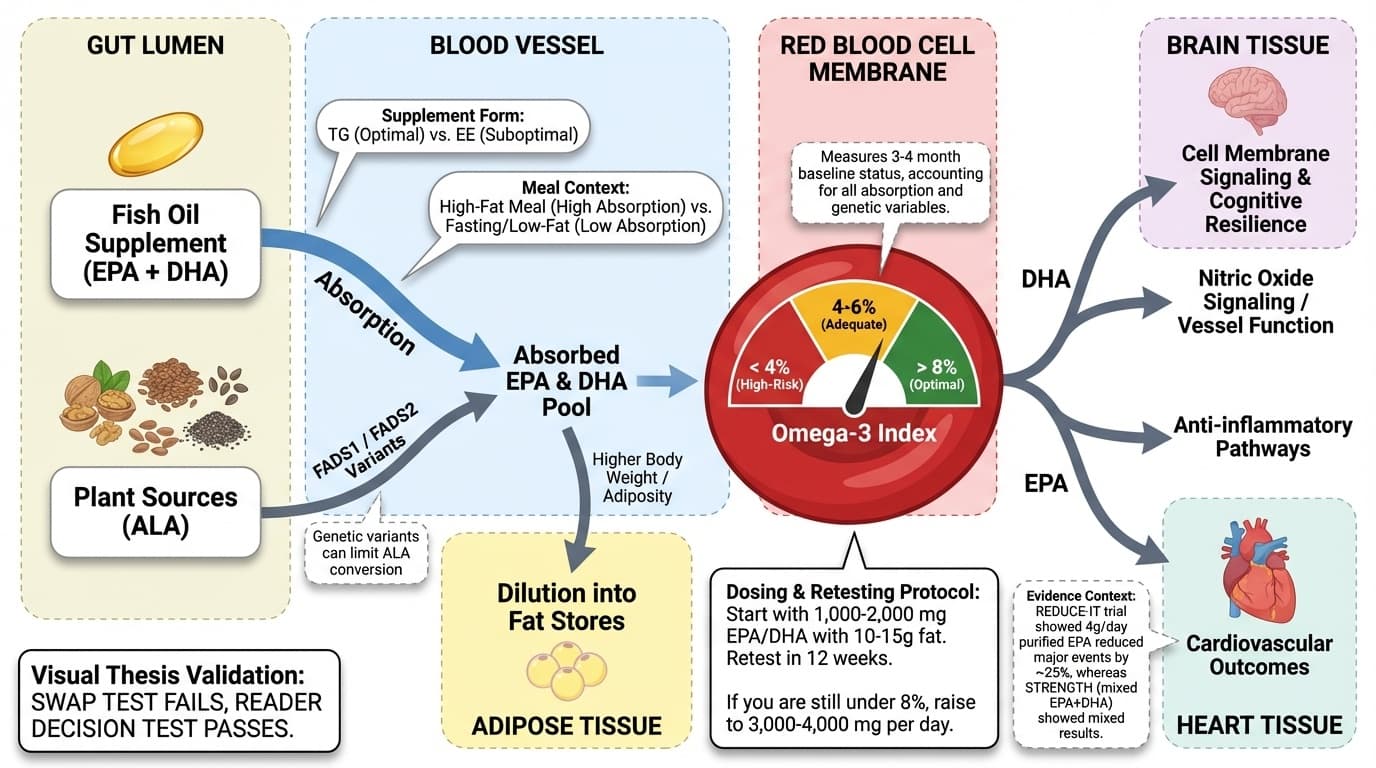
Your Omega-3 Supplement May Be Doing Nothing: The Omega-3 Index Is the Only Way to Know
Why taking fish oil and having optimal omega-3 status are completely different things
Diagram glossary
- ALA:
- A plant-based omega-3 fatty acid found in foods like flax or chia seeds.
- EPA/DHA:
- Marine omega-3 fatty acids that impact heart health and determine your Omega-3 Index.
- FADS1/FADS2:
- Genes whose variants can limit the conversion of plant ALA into EPA and DHA.
Track this in your stack
See how omega 3 relates to your health goals and monitor changes in your biomarkers over time.
Sources (12)
This article informs how supplementation moves 3 markers.
Each biomarker page clusters supplements, ranges, and the evidence behind every score. Useful when you're starting from a number, not a goal.
% EPA + DHA in red-blood-cell membranes. Target >= 8% for cognitive protection; most US adults sit at 4-5%.
High-sensitivity C-reactive protein. > 3 mg/L associated with chronic systemic inflammation affecting the brain and vasculature.
Apolipoprotein B — particle count of atherogenic lipoproteins. Levels > 80 mg/dL associated with cardiovascular event risk independent of LDL-C.