
Taurine May Lower Blood Pressure and Improve Metabolic Health: What the Research Says
You probably think of taurine as just an ingredient in energy drinks, but its real power goes much deeper.
New research reveals taurine may help lower blood pressure, improve how your body handles sugar and cholesterol, and even reduce chronic inflammation. If you care about your heart, your energy, and your longevity, understanding taurine could give you an edge you never expected.
- HOMA-IR (calc)
- Insulin resistance by combining fasting glucose and insulin levels.
- C-Reactive Protein (cardiac)
- High-sensitivity C-reactive protein, a liver-produced acute-phase reactant. Independent predictor of heart attack and stroke.
- Hemoglobin A1c
- Average blood sugar over the past 2-3 months by assessing glycated hemoglobin. each 1% increase raises cardiovascular risk by 18%.
- Meta-Analysis
- A statistical technique combining results from multiple studies to find overall patterns.
- Glucose
- Blood sugar level, the primary energy source for cells. Fasting glucose is normal, prediabetes, ≥126 suggests diabetes.
- Cholesterol, Total
- Total cholesterol, the sum of HDL, LDL, and VLDL cholesterol. elevated levels increase atherosclerotic cardiovascular disease risk.
- Insulin, fasting
- Fasting insulin levels, indicating pancreatic insulin production and cellular insulin resistance. Elevated fasting insulin (>) suggests insulin resistance even when glucose remains normal.
Imagine you are in the middle of your day, maybe on your way to work or finishing up a brisk walk. You pass a convenience store and see those familiar cans of energy drinks stacked by the register. You might wonder, what really goes into those cans? Taurine is probably the first word you notice on the label. But here’s the twist—the real story of taurine is not about a quick energy buzz. It is about your heart, metabolism, and long-term health.
Many of us walk around with silent risk factors—high blood pressure, creeping cholesterol, or blood sugar numbers that inch up year after year. Maybe you have a family member with heart disease or diabetes. Maybe your last checkup showed numbers you wish were lower. It is easy to feel like you are fighting an invisible battle. What if something as simple and well-tolerated as taurine could help turn the tide?
That is what scientists are now uncovering. Their research is moving taurine from the world of high-octane drinks into the conversation about cardiovascular and metabolic health. You are not alone if you wonder whether a supplement could make a real difference. Let's dig into why taurine is making headlines and what it might mean for your health journey.
If you are like most adults, you probably know someone—maybe even yourself—who is wrestling with blood pressure, cholesterol, or blood sugar concerns. Heart disease and metabolic syndrome do not announce themselves with a warning bell. They develop quietly, often over decades, and their consequences can be life-changing.
Taurine is what scientists call a conditionally essential amino acid. Your body makes some, but not always enough, especially under stress, illness, or as you age. Taurine works in cells throughout your body. In your heart and blood vessels, taurine helps relax the blood vessel walls. This makes it easier for blood to flow, which can lower pressure inside those vessels. When your blood vessels are more relaxed, your heart does not have to work as hard, and your risk of damage from high blood pressure goes down.
Taurine also helps your body handle sugar and fats. In your liver and muscles, taurine improves how insulin works. That means your cells can pull sugar out of your blood more easily, preventing the spikes and crashes that wear down your metabolism over time. This is crucial because insulin resistance—when your cells stop responding to insulin—sits at the heart of metabolic syndrome and type two diabetes. Taurine helps keep that door open.
But there is more. Taurine acts as an antioxidant and an anti-inflammatory. Every day, your cells face oxidative stress and chronic, low-level inflammation that speed up aging and disease. Taurine helps quench some of those fires, protecting your blood vessels, your heart, and even your brain from long-term damage.
These mechanisms are not just theory. They are why researchers are so interested in taurine for people who want to stay ahead of heart disease and diabetes, or even just feel sharper and more energetic as the years pass. So what does all this mean for your numbers and your risks? That brings us to what you can actually measure.
You might be wondering, how do you know if taurine is working for you? The answer lies in your biomarkers—those numbers your doctor checks during a physical, and the ones you can sometimes track at home. These are the signposts that tell you whether your daily habits, supplements, or medications are moving you toward better health—or quietly letting risk build up.
Let’s start with blood pressure. Clinical trials show that people with prehypertension or mild hypertension—meaning your systolic blood pressure is above 120 but below 160—can see drops of about four millimeters of mercury in systolic pressure after supplementing with taurine. For context, even small reductions in blood pressure translate into a meaningful drop in heart attack and stroke risk over time. If you are tracking your blood pressure at home and see it trending from 134 over 82 down to 130 over 80, that is not just a nice number. It is a sign that your arteries are less stressed, and your heart is under less strain.
Cholesterol is another key marker. Taurine is linked to modest improvements in LDL—often called "bad" cholesterol—and sometimes increases HDL, which is the "good" kind. Some studies show a drop in triglycerides as well. If your LDL is above 130 milligrams per deciliter, or your HDL is below 40 for men or below 50 for women, those are numbers to watch. Improving these values by even ten to fifteen percent can cut your long-term risk of heart attacks and strokes in half.
Blood sugar and insulin sensitivity are where taurine shines brightest for people with early metabolic issues. Studies show fasting blood glucose levels drop, and the hemoglobin A1c—a marker that reflects your average blood sugar over three months—can improve by about zero point one seven percent. You might think that is a small change, but every decimal point counts when you are trying to avoid diabetes. Taurine also lowers the HOMA-IR score, which is a measure of insulin resistance, by about half a point. That is the difference between being on the path to type two diabetes and holding steady in the healthy range.
Inflammation is the final piece. High-sensitivity C-reactive protein (CRP) and malondialdehyde are markers of inflammation and oxidative stress. High CRP, for example, is linked to higher risk of heart attacks and chronic disease. Taurine supplementation nudges these markers downward, signaling your body is operating with less background inflammation.
So if you are tracking your health, here is what to watch: blood pressure, cholesterol—especially LDL and HDL—fasting blood sugar, A1c, and CRP. These are the numbers that move in response to taurine, and they are the numbers that predict your risk for heart attack, stroke, diabetes, and even cognitive decline.
Now, knowing what to look for is only half of the puzzle. How do you actually use taurine to make a difference? That is what we will cover next.
You might be asking, how much taurine do you need to see results? The answer comes from a series of carefully controlled clinical trials and meta-analyses. The sweet spot for most adults is between fifteen hundred and three thousand milligrams per day. That is a far cry from the fifty to one hundred milligrams you might find in an energy drink. To hit the target range used in research, you need a dedicated taurine supplement—either capsules or powder.
Here is how to structure your dosing. Break your total daily amount into two separate doses—once with breakfast, once with dinner. For example, you might take seven hundred fifty milligrams in the morning and another seven hundred fifty milligrams in the evening, or go up to fifteen hundred milligrams twice daily for a total of three thousand milligrams. Taking taurine with meals helps your body absorb it more efficiently and keeps blood levels steady throughout the day.
Most people start to see changes in their blood pressure, blood sugar, and cholesterol after about four to eight weeks of consistent use. That means taurine is not a quick fix, but a steady, background helper. The effects are often stronger when taurine is taken by itself, not mixed into a cocktail of other supplements. This is what researchers saw when comparing single-ingredient versus multi-ingredient supplements.
Mechanistically, taurine is believed to work by helping your blood vessels relax—through effects on calcium signaling and nitric oxide. It also aids the liver in processing cholesterol, and helps insulin work more effectively in your muscles and fat tissue. These are not just surface-level changes. They are shifts in how your body manages stress, calories, and inflammation at a cellular level.
In terms of safety, nearly all clinical trials agree that doses up to three thousand milligrams per day are well-tolerated in healthy adults. A few people report minor digestive upset—think mild nausea or loose stools—when starting out, but this usually fades. If you have kidney disease or take medications that affect your kidneys, talk with your doctor first. Taurine is not a substitute for prescribed blood pressure or diabetes medications, but it may be a valuable add-on for many people.
If you want to try taurine, choose a reputable supplement brand. Look for third-party testing to ensure purity. Capsules and powders are both effective—just pick what fits your routine.
So what about the rest of your lifestyle? Taurine works best when paired with the right daily habits. Let’s talk about those next.
Adding taurine to your routine can nudge your numbers in the right direction, but it is rarely the whole story. If you want to see real, lasting improvement in blood pressure, metabolic health, and longevity, your daily lifestyle choices are the engine that drives results—and taurine is the turbocharger.
Start with movement. Regular, moderate-intensity exercise—such as brisk walking, cycling, or swimming for at least one hundred fifty minutes per week—directly improves insulin sensitivity and blood vessel function. Exercise increases nitric oxide, just like taurine, helping your arteries stay flexible and responsive. It also reduces inflammation and supports healthy cholesterol patterns. If you add taurine to a week that already includes three or four walks, you are stacking the odds in your favor.
Nutrition is the next pillar. Diets rich in whole, minimally processed foods—think vegetables, fruits, legumes, nuts, lean proteins, and healthy fats—help keep blood sugar and cholesterol under control. Taurine is found naturally in many animal-based foods, especially fish, shellfish, and dark meats. However, most people do not get enough from diet alone to reach the levels used in research, especially if you eat mostly plant-based meals. That is why supplementation makes sense for many people, but it works best in the context of an overall healthy diet.
Sleep is the secret weapon most people overlook. Poor sleep raises blood pressure, increases insulin resistance, and ramps up inflammation. Aim for at least seven hours of quality sleep each night. Good sleep hygiene—consistent bedtime, a dark and quiet room, and limiting screens before bed—can make a real difference. Taurine may also support healthy sleep by balancing neurotransmitters in the brain, making it a gentle ally for winding down in the evening.
Stress management matters, too. Chronic stress raises cortisol, a hormone that makes your body hold on to sodium and raises blood pressure. Mindfulness, breathing exercises, or simply taking regular breaks during high-pressure days can buffer your body against these effects. The anti-inflammatory and calming effects of taurine may help, but they cannot replace the power of a balanced, lower-stress lifestyle.
Finally, keep an eye on your numbers. Regular blood pressure checks at home, bloodwork every three to six months to monitor cholesterol and blood sugar, and early conversations with your healthcare provider can catch problems before they escalate. Taurine can help move the needle, but you have to know where you stand to measure progress.
So if you are already moving, eating well, sleeping enough, and managing stress, taurine can be the extra nudge to reach your goals. But even if you are just starting out, combining these levers with supplementation will give you the best chance for success.
So how do you know if something is off, even before lab results tell you? That is what we will tackle next.
Most people do not wake up one day with high blood pressure or type two diabetes. The warning signs appear gradually, often long before a diagnosis. Learning to notice those early clues is one of the most powerful steps you can take for prevention.
Start with blood pressure. If you find yourself feeling lightheaded, dizzy, or experiencing pounding headaches—especially in the morning or after physical activity—these could be subtle signals that your blood pressure is running high. Frequent nosebleeds or unexplained fatigue can also be clues, although many people have high blood pressure with no symptoms at all. That is why home monitoring is valuable. If your readings consistently run above one hundred thirty over eighty, it is time to act.
Watch your energy and mood after meals. If you often feel unusually tired, foggy, or irritable after eating—especially carb-heavy meals—your body may be struggling to manage blood sugar. Occasional symptoms are normal, but if you notice a pattern, it is worth checking fasting blood glucose or an A1c with your provider.
Unexplained weight gain, especially around the middle, is another early marker. Central fat is closely linked to insulin resistance and higher cardiovascular risk. If your waist circumference is creeping up year over year, do not chalk it up to aging alone.
Changes in cholesterol usually do not cause symptoms, but some people notice yellowish patches around the eyes or small bumps on the skin. These are rare, but they reflect high cholesterol levels over time.
Inflammation is even trickier to spot. Chronic fatigue, achy joints, or low motivation can sometimes be subtle signs of ongoing inflammation. While these are non-specific, they can nudge you to check in with your healthcare provider and look at your underlying numbers.
Finally, pay attention to your family history. If your parents or siblings had heart disease, diabetes, or strokes before age sixty, your own risk is higher—even if you feel healthy. This genetic risk is not destiny, but it is a reason to be proactive with your lifestyle, your testing, and your interventions.
If you notice any of these patterns, do not wait for a diagnosis. Early action—whether that means adjusting your habits, starting taurine, or talking with your provider about risk—can change your trajectory. That brings us to the bottom line: what does all this mean for your daily life and your future?
You started this journey thinking of taurine as an energy drink ingredient. Now you know it is a quietly powerful ally for your heart, your metabolism, and your long-term health. The science is clear—adults with risk factors for high blood pressure, cholesterol, or metabolic syndrome can see measurable improvements in key biomarkers by adding fifteen hundred to three thousand milligrams of taurine per day, split into two doses with meals.
Making taurine part of your routine is simple. Pick a reputable supplement, take it with breakfast and dinner, and track your progress over the next two to three months. Pair it with regular movement, a nutrient-rich diet, quality sleep, and stress management for the best results.
Remember, taurine is not a replacement for prescribed medications or medical advice. It is a powerful addition to an evidence-based routine. If you have kidney issues, are pregnant or breastfeeding, or take medications that affect your heart or kidneys, talk to your provider before starting.
Your next step? Check your blood pressure at home weekly. Schedule your next bloodwork to look at cholesterol, blood sugar, and CRP. Watch for early warning signs, and do not ignore changes in energy, weight, or family history risk.
The best health routines are built on small, consistent steps—adding taurine could be one of those steps that pays off for years to come. The science is moving fast, and you have the power to put that knowledge to work in your daily life, starting today.
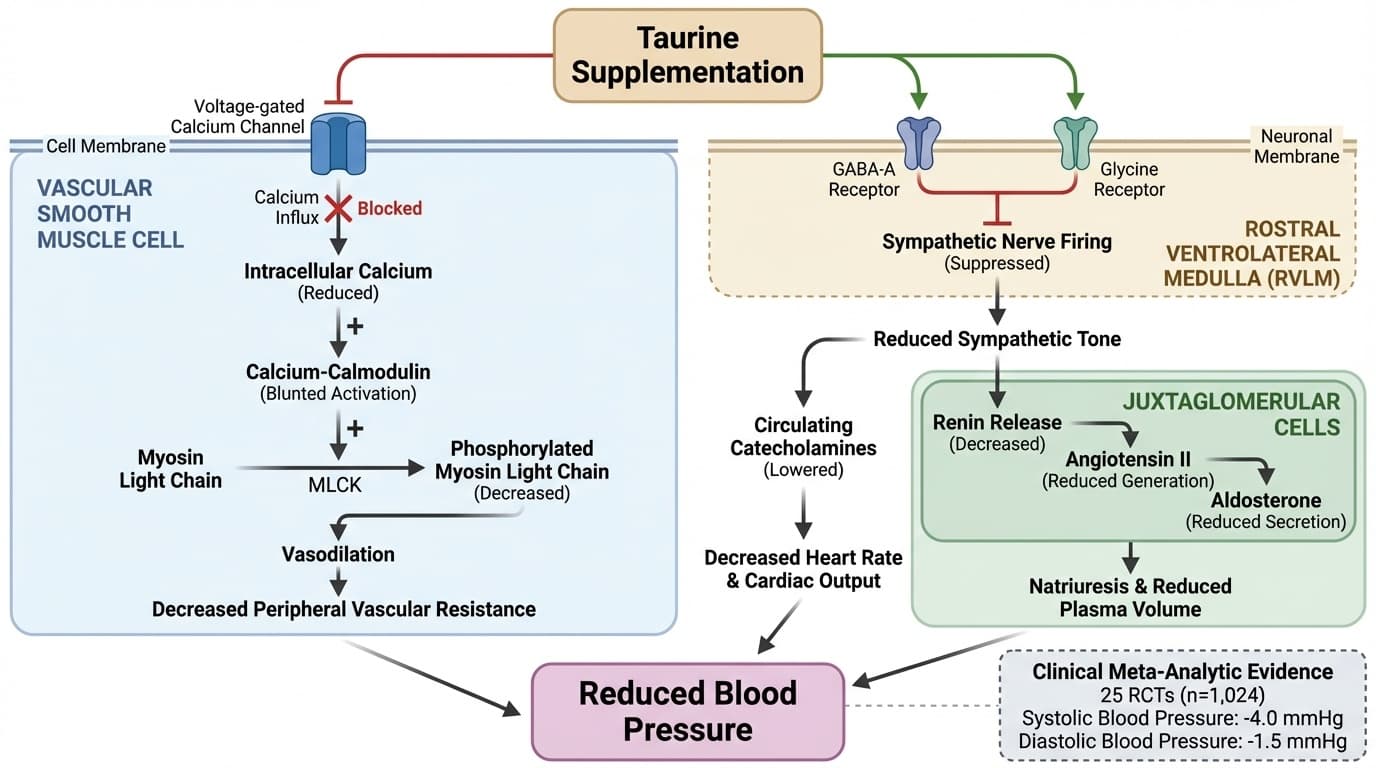
Taurine's Blood Pressure Effect Is Real — But Only Half the Story Your Bloodwork Will Tell
The diagram should depict two parallel mechanistic branches originating from taurine supplementation: (1) a vascular pathway showing taurine blocking voltage-gated calcium channels in smooth muscle cells, reducing MLCK activation and myosin phosphorylation, leading to vasodilation and decreased peripheral resistance; and (2) a central nervous system pathway showing taurine activating GABA-A/glycine receptors in the RVLM to suppress sympathetic outflow, reduce catecholamine release, inhibit the RAAS cascade (renin → angiotensin II → aldosterone), and promote natriuresis. Both branches converge on the downstream outcome of reduced systolic (−4.0 mmHg) and diastolic (−1.5 mmHg) blood pressure, as quantified across 25 RCTs.
Diagram glossary
- angiotensin:
- A peptide hormone that promotes fluid retention and increases blood pressure.
- calmodulin:
- A calcium-binding protein that activates MLCK to facilitate smooth muscle contraction.
- catecholamine:
- A class of signaling molecules that increase heart rate and cardiac output.
- MLCK:
- An enzyme that phosphorylates myosin light chains to trigger vascular smooth muscle contraction.
- mmHg:
- Millimeters of mercury, a standard scientific unit used to measure blood pressure.
- myosin:
- A motor protein whose light chains are phosphorylated to cause smooth muscle contraction.
- RVLM:
- A brainstem region involved in regulating sympathetic nerve firing and blood pressure.
- Taurine:
- An osmoregulatory amino acid that lowers blood pressure by modulating calcium and sympathetic activity.
Track this in your stack
See how taurine relates to your health goals and monitor changes in your biomarkers over time.
Sources (5)
This article informs how supplementation moves 1 marker.
Each biomarker page clusters supplements, ranges, and the evidence behind every score. Useful when you're starting from a number, not a goal.