
The metformin interaction that makes berberine more complicated for people already on diabetes medication
New crossover trial reveals dose-dependent pharmacokinetic interaction between goldenseal and metformin in type 2 diabetes patients
You might have heard about berberine as the latest 'natural metformin.
' But if you already take diabetes medication like metformin, the story is more complicated than supplement ads let on. New research shows berberine can actually lower the levels of metformin in your body, raising practical questions for anyone managing blood sugar with both. Let’s walk through what this means for your health, how berberine really works, and what to watch for if you’re considering adding it to your routine.
- Root extract
- An herbal extract made from the root portion of a plant.
- Glucose
- Blood sugar level, the primary energy source for cells. Fasting glucose is normal, prediabetes, ≥126 suggests diabetes.
- Goldenseal
- A North American plant (Hydrastis canadensis) whose root contains berberine as its primary active compound
- Hemoglobin A1c
- Average blood sugar over the past 2-3 months by assessing glycated hemoglobin. each 1% increase raises cardiovascular risk by 18%.
- Systemic exposure
- The total amount of a drug that reaches the bloodstream and circulates through the body, measured as area under the concentration-time curve
- HOMA-IR (calc)
- Insulin resistance by combining fasting glucose and insulin levels.
- Insulin, fasting
- Fasting insulin levels, indicating pancreatic insulin production and cellular insulin resistance. Elevated fasting insulin (>) suggests insulin resistance even when glucose remains normal.
Picture this: you’re sitting at your kitchen table, sipping coffee, scrolling through your phone. You notice another ad for berberine—touted as nature’s answer to blood sugar problems. Maybe you’re already on metformin. Maybe you’ve been told your A1C is creeping up, or you’ve been managing type 2 diabetes for years. It’s tempting to add a natural supplement to your daily routine, especially when you hear about all the benefits. But what happens when two good things don’t play nicely together? This is not just a theoretical concern. It’s a real scenario millions of people face, thanks to new scientific findings.
Many people with diabetes want every tool to keep blood sugar in check. But sometimes, the interaction between medications and supplements can change how well each one works. If you’re already relying on metformin, what you add to your regimen matters. And that brings us to the surprising twist scientists uncovered about berberine’s effect on metformin. The story is not just about what works, but about how your body handles and absorbs these compounds together. Let’s unpack why this matters, and what you need to know before you try the latest supplement trend.
Think about how your body processes medication. When you swallow a pill, it travels through your digestive system, gets absorbed into your bloodstream, and then reaches organs and tissues where it does its work. For drugs like metformin, effectiveness depends on reaching a certain level in your blood. If something interferes with absorption or speeds up removal, the drug may not work as intended.
That’s exactly what a landmark crossover trial published in 2025 set out to test. Researchers recruited adults with type 2 diabetes who were already taking metformin. Over several weeks, participants took goldenseal root extract—a plant source rich in berberine—at doses matching common commercial supplements. The scientists measured how much metformin actually showed up in the bloodstream after people took it with and without goldenseal.
The results were clear and consistent. Higher doses of goldenseal led to lower levels of metformin circulating in the body. The more berberine people took, the less metformin showed up in their blood. This is known as a dose-dependent reduction in systemic exposure. The reason? Berberine and related compounds can change the way your gut absorbs drugs. They interact with transport proteins—like P-glycoprotein and organic cation transporters—that act as gatekeepers along your intestinal wall. When berberine inhibits these transporters, less metformin crosses from your gut into your bloodstream. It’s a bit like closing half the toll booths on a busy highway: traffic slows, and fewer cars get through.
So what? For people using metformin to keep blood sugar under control, less drug in the bloodstream could mean less effect. Metformin works best when it reaches a steady, therapeutic level. If berberine reduces that by even a moderate amount, your A1C might creep up, or your fasting glucose could become less predictable. The impact will vary from person to person, but the mechanism is real, and the risk is higher the more berberine you take. That’s why this research matters for anyone thinking about combining these two compounds. Next, let’s look at what berberine actually does for blood sugar—and who benefits most.
You’ve probably seen headlines calling berberine a natural alternative to metformin. Supplement companies love to point out its ability to lower blood sugar. But the real story is more nuanced. The strongest evidence for berberine comes from studies in people who already have problems with blood sugar—specifically, those with type 2 diabetes or polycystic ovary syndrome, often called PCOS.
Meta-analyses of randomized trials give us the clearest picture. These are studies that pool data from dozens of smaller trials to see the overall effect. In people with type 2 diabetes, berberine consistently lowers fasting glucose, A1C, and measures of insulin resistance. One comprehensive review found that berberine reduced fasting blood insulin by just over two units and dropped A1C by about zero point six percent. For people trying to bring A1C down from, say, eight to seven percent, that’s a meaningful improvement.
Women with PCOS—a condition marked by high insulin and often high blood sugar—also see benefits. Systematic reviews show berberine helps lower insulin resistance markers in this group. That’s important because insulin resistance is at the core of both PCOS and type 2 diabetes. By improving how your body responds to insulin, berberine helps move the needle on metabolic health.
But here’s the catch: nearly all this evidence comes from people who already have high blood sugar or insulin resistance. The studies did not focus on healthy people or those with normal glucose. If your fasting glucose is already in the normal range, there is not much evidence that berberine will make you healthier or lower your risk of future diabetes. That means the supplement’s benefits are most proven in the very people most likely to already be on metformin. And that brings us back to the practical dilemma—can you safely combine both, and will doing so actually help you? Let’s dig deeper into what the numbers and mechanisms mean for real-world decisions.
How do you know if berberine or metformin is working for you? The answer lies in your biomarkers—objective numbers you can track over time. For anyone managing blood sugar, three main markers tell the story: fasting glucose, A1C, and insulin resistance scores like HOMA-IR.
Fasting glucose is the easiest to check. Most people aim for a level below one hundred milligrams per deciliter if they’re not diabetic, or below one hundred and thirty if they’re already diagnosed. A1C is a three-month average, with most diabetes guidelines targeting below seven percent, though some aim for even tighter control depending on age and risk factors. HOMA-IR, which stands for Homeostatic Model Assessment of Insulin Resistance, is a bit more technical but gives you a sense of how efficiently your body uses insulin. Lower is better, and a typical goal is below two for people without diabetes, or as low as possible for those with known insulin resistance.
In the major meta-analyses, berberine helped move all three markers in the right direction—but again, mainly for people starting with high values. A drop in fasting insulin of two units or more is considered significant. An A1C drop of half a percent or more can make the difference between needing another medication or not.
But here’s the twist. If you combine berberine with metformin, you need to watch your numbers even more closely. If berberine reduces your metformin exposure, your A1C could plateau or even rise, even if you thought you were adding a helper supplement. On the flip side, some people may see an additive effect if the two compounds work together rather than against each other. The only way to know is through regular testing—at least every three months for A1C, ideally monthly for fasting glucose if you’re making changes, and periodic checks of insulin or HOMA-IR if your doctor can order them.
So what does this mean for you? If you’re considering adding berberine to your routine, especially if you’re also on metformin, make sure you have a baseline of your numbers. Track them closely for a few months after starting any new supplement. And always loop in your healthcare provider, because these interactions can be subtle but meaningful over time. That brings us to the practical protocol for using berberine wisely.
If you’ve decided to try berberine, or if you’re already taking it, there are a few key rules to follow—especially if you’re on other medications. Most effective studies used doses of berberine between five hundred and fifteen hundred milligrams per day, split into two or three doses. That mimics the way your body processes the compound and keeps blood levels more stable.
The mechanism behind berberine’s glucose-lowering effect is complex but fascinating. It activates an enzyme called AMP-activated protein kinase, or AMPK. Think of AMPK as your cellular fuel sensor. When it’s switched on, your cells burn more glucose for energy, improve insulin sensitivity, and decrease fat storage. Berberine also reduces absorption of carbohydrates in the gut and may shift the balance of your gut bacteria to more metabolically friendly species.
If you’re adding berberine to metformin, the evidence suggests you start on the low end—five hundred milligrams per day—and increase only if you tolerate it well and your numbers support the move. Monitor for signs of low blood sugar, especially if you’re also using other diabetes medications. Don’t take both supplements at the exact same time unless advised by your doctor, as separating doses by a few hours may help reduce direct interaction in your gut. There is no evidence that taking more than fifteen hundred milligrams per day adds benefit for most people, and higher doses can increase side effects like stomach upset or diarrhea.
Importantly, the 2025 goldenseal study showed that even common supplement doses of berberine could reduce metformin exposure. That means more is not always better. If you start to see your blood sugar drift upward or your A1C plateau, it could be a sign that berberine is interfering with your medication. Always talk to your healthcare provider before making changes, and never stop prescribed medication without a plan. Let’s look now at the lifestyle factors that can amplify or undermine any supplement protocol.
Supplements like berberine can be powerful, but they work best alongside healthy habits. The research is clear: diet, exercise, and sleep all directly affect insulin sensitivity, blood sugar, and even how your body handles medications.
Start with your diet. Fiber-rich foods—think beans, lentils, whole grains, vegetables—slow the absorption of glucose and support healthy gut bacteria. These foods also help modulate how quickly drugs like metformin and berberine leave your gut and enter your bloodstream. Aim for at least twenty-five grams of fiber per day, and spread it out across meals. Consistent fiber intake improves both glucose control and gut health, which can support the mechanisms by which berberine works.
Exercise is the single most powerful non-prescription way to increase your cells’ sensitivity to insulin. Both aerobic activities—like walking, cycling, or swimming—and resistance training drive your muscles to soak up more glucose without needing extra insulin. Even short, brisk walks after meals can blunt the typical blood sugar spikes. Aiming for at least one hundred and fifty minutes of moderate movement per week is a proven baseline, but more always helps.
Sleep is often overlooked. Poor sleep, especially under six hours per night, raises stress hormones and drives insulin resistance. Both berberine and metformin work better when you’re well-rested. Prioritizing sleep hygiene—keeping a consistent bedtime, limiting screens before bed, and creating a cool, dark environment—can make a measurable difference in your glucose numbers.
Hydration matters too. Both berberine and metformin are processed by your kidneys. Staying well-hydrated helps protect kidney function and ensures these compounds are cleared efficiently.
So what does this mean in practice? Supplements can only do so much if your day-to-day habits are working against you. Think of berberine and metformin as tools that work best when the foundation—your diet, activity, and sleep—is solid. Next, let’s talk about early warning signs that something in your regimen may not be working as intended.
Sometimes, your body gives you clues that a supplement or medication routine needs adjusting. For anyone using berberine, metformin, or both, there are a few specific signs to watch for.
The most obvious is a change in your blood sugar readings. If you see unexpected spikes—or your usual numbers start to climb despite consistent habits—that’s a hint something in your protocol has shifted. It could mean berberine is interfering with metformin’s absorption, or that another variable needs attention.
Watch for symptoms of low blood sugar, too. Dizziness, shakiness, sweating, confusion, or sudden fatigue can signal hypoglycemia, especially if you’re using multiple glucose-lowering agents. While berberine alone rarely causes hypoglycemia, the combination with other medications can occasionally push you too low, especially after exercise or missed meals.
Digestive issues are common with both berberine and metformin. Nausea, diarrhea, stomach pain, or bloating can occur, particularly at higher doses. If these symptoms persist or worsen, it may be a sign you need to adjust your dosing or timing, or that another underlying gut issue needs attention.
Other red flags include unexplained fatigue, new or worsening numbness or tingling in your hands and feet, or changes in kidney function on lab tests. Both berberine and metformin are processed through the liver and kidneys, so regular monitoring is important, especially if you have a history of organ problems.
Finally, if you’re not seeing the improvements you expect after three to six months—such as a lower A1C or improved fasting glucose—it’s time to reassess. Sometimes, the best move is to simplify your regimen, focus on foundational lifestyle changes, or consult with a specialist. The bottom line is to pay attention to trends, not just single data points. Your numbers and how you feel are both important guides. That brings us to the final synthesis—how to move forward with confidence.
Managing blood sugar is a long game, and the best results come from a combination of evidence-based medicine, smart supplement use, and sustainable lifestyle changes. Berberine is a promising compound with real benefits for people with type 2 diabetes or PCOS, but the story gets more complicated if you’re already on metformin.
The latest research shows that berberine can lower the amount of metformin in your system by interfering with absorption in your gut. That means you might not get the full benefit of your prescribed medication if you add berberine on top. The strongest benefits for berberine come in people who start with high blood sugar or insulin resistance—not in healthy individuals looking for an edge. If you’re on metformin and thinking about berberine, the safest approach is to involve your healthcare provider, track your key biomarkers closely, and start with conservative doses.
Supplements are not magic bullets. They work best when combined with a foundation of good nutrition, regular movement, and restorative sleep. Pay attention to your body’s signals—both numbers and symptoms—and don’t be afraid to adjust your approach if things are not working as expected.
Ultimately, the goal is not just lower numbers, but better health and quality of life. By understanding how berberine and metformin interact, you can make smarter choices, avoid hidden pitfalls, and keep moving forward on your metabolic health journey. If you’re ready to take the next step, start by reviewing your regimen, getting a baseline of your blood sugar markers, and bringing your questions to your healthcare team. Your path to better metabolic health is personal, but it starts with knowledge and a willingness to adapt.
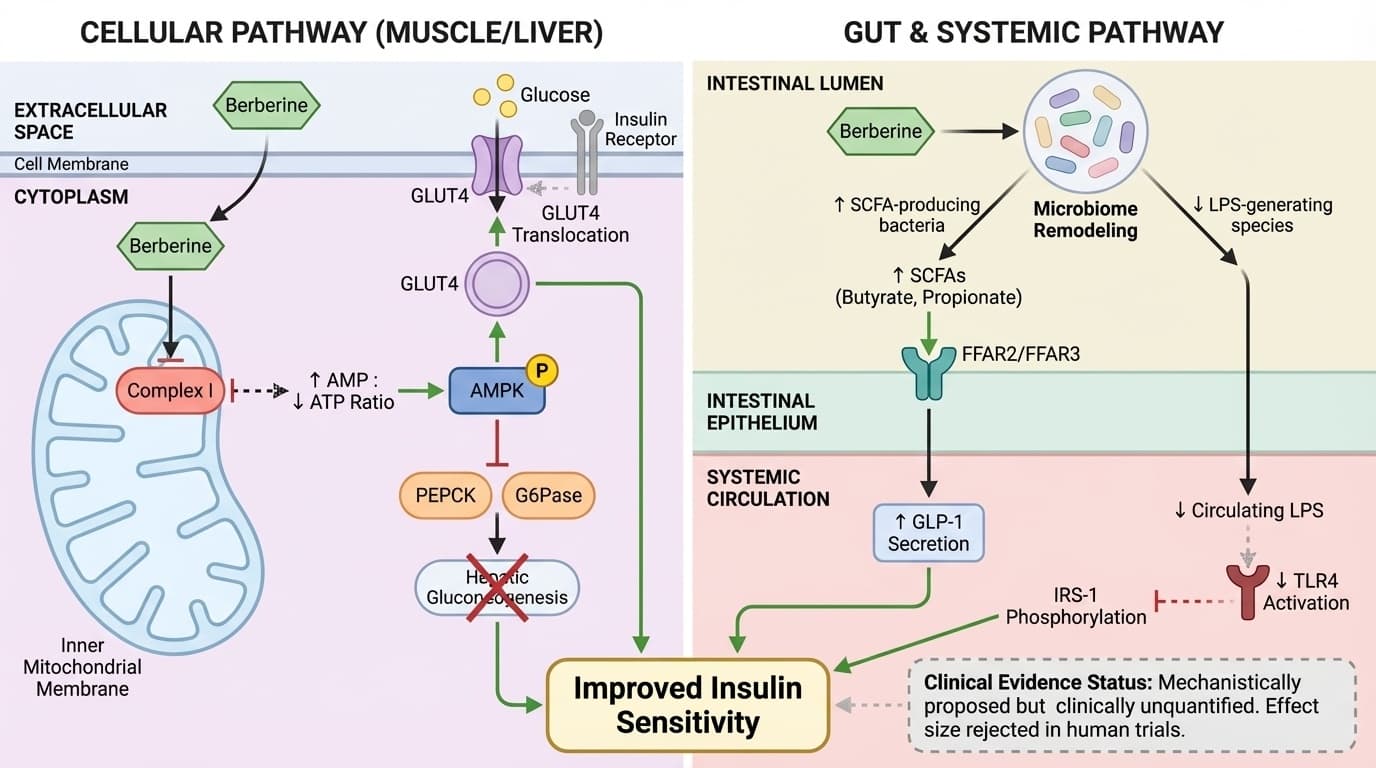
Berberine Works Through Your Gut Microbiome — Which Is Why It Works Differently for Everyone
The diagram should depict berberine entering a skeletal muscle or hepatocyte cell and inhibiting mitochondrial Complex I, leading to AMPK phosphorylation and downstream GLUT4 translocation and suppression of gluconeogenic enzymes (PEPCK, G6Pase). A secondary panel should illustrate berberine's action in the gut lumen, showing microbiome remodeling, increased SCFA production, GLP-1 release, and reduced LPS-driven TLR4/IRS-1 inflammatory interference, with both pathways converging on an improved insulin sensitivity outcome node marked as mechanistically proposed but clinically unquantified.
Diagram glossary
- AMPK:
- AMP-activated protein kinase, a cellular energy sensor and master metabolic regulator.
- ATP:
- Adenosine triphosphate, the primary molecule used to store and transfer energy in cells.
- Berberine:
- A plant compound that modulates metabolism and insulin sensitivity by activating AMPK.
- butyrate:
- A short-chain fatty acid produced by gut microbial fermentation that supports metabolic health.
- FFAR2/FFAR3:
- Free fatty acid receptors that mediate metabolic signaling from short-chain fatty acids.
- GLP-1:
- Glucagon-like peptide-1, an incretin hormone that stimulates insulin secretion and regulates appetite.
- glucose:
- A simple sugar that serves as the primary energy source for cellular metabolism.
- GLUT4:
- An insulin-regulated glucose transporter responsible for cellular glucose uptake in muscle and fat.
- insulin:
- A pancreatic hormone that regulates blood glucose levels by facilitating cellular glucose uptake.
- LPS:
- Lipopolysaccharide, a bacterial outer membrane component that triggers systemic inflammation and insulin resistance.
- PEPCK:
- Phosphoenolpyruvate carboxykinase, a key enzyme that regulates glucose production during hepatic gluconeogenesis.
- SCFA:
- Short-chain fatty acids produced by gut bacteria that influence host energy metabolism and immunity.
Conclusions
Berberine presents a well-documented but complicated picture for glucose management. The evidence for glucose-lowering effects is robust and replicated across multiple meta-analyses, but it comes primarily from studies in people with type 2 diabetes and PCOS—populations with elevated baseline glucose and insulin resistance [1]. The 2025 goldenseal-metformin interaction study adds a new consideration: people with the strongest evidence for berberine's benefits are also most likely to be on metformin, and combining them has measurable pharmacokinetic consequences [3]. Anyone considering berberine while taking metformin should discuss this interaction with a healthcare provider and potentially monitor glucose more closely.
The metformin interaction study measured drug levels in blood but didn't assess whether reduced metformin exposure actually affects glucose control in practice [3]. The glucose evidence, while extensive, comes predominantly from studies in diagnosed diabetic and PCOS populations, making it unclear how well these findings apply to people with normal glucose tolerance [1]. Most studies used berberine doses between 900-1500mg daily, but optimal dosing for different populations remains uncertain. The anti-inflammatory effects, while promising, come from separate studies with different methodologies and populations than the glucose research [1].
Track this in your stack
See how berberine relates to your health goals and monitor changes in your biomarkers over time.
Sources (4)
This article informs how supplementation moves 2 markers.
Each biomarker page clusters supplements, ranges, and the evidence behind every score. Useful when you're starting from a number, not a goal.
3-month average blood glucose. Levels >= 5.7% associated with cognitive decline independent of diabetes diagnosis.
Apolipoprotein B — particle count of atherogenic lipoproteins. Levels > 80 mg/dL associated with cardiovascular event risk independent of LDL-C.